
How to Navigate Therapy Options for Your Best Fit

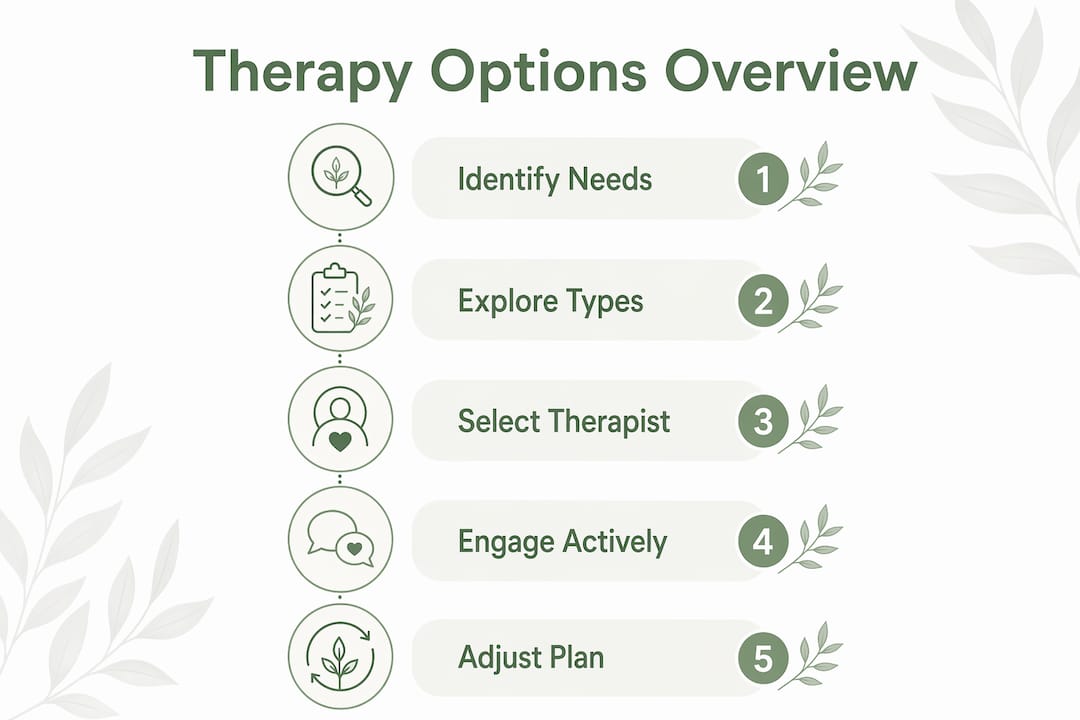
Knowing how to navigate therapy options means understanding how different therapeutic approaches and providers align with your unique mental and physical health needs. Whether you are dealing with chronic pain, anxiety, trauma, or a combination of challenges, the right therapy can make a measurable difference in your quality of life. Resources like Psychology Today, SAMHSA’s FindTreatment.gov, and Mental Health America offer structured tools to help you compare providers, verify insurance, and assess fit. This guide gives you a clear, step-by-step path to choosing the right approach and getting the most from your sessions.
What are the main types of therapy available?
Therapy is not a single treatment. It is a broad category of approaches, each designed for different needs, goals, and conditions. Understanding the main types of therapy available is the first step to making a confident choice.
Cognitive Behavioral Therapy (CBT) is the most widely researched form of talk therapy. It focuses on identifying and changing unhelpful thought patterns that drive negative emotions and behaviors. CBT is structured, goal-oriented, and typically runs for 12 to 20 sessions. It is commonly used for anxiety, depression, and phobias.

Psychodynamic therapy takes a longer view. It explores how past experiences and unconscious patterns shape your current behavior. Sessions are less structured than CBT, and treatment can last months or years. This approach works well for people dealing with relationship difficulties, identity questions, or recurring emotional patterns they cannot explain.
EMDR (Eye Movement Desensitization and Reprocessing) is a specialized approach for trauma. A therapist guides you through specific eye movements while you recall distressing memories, which helps the brain reprocess those memories so they lose their emotional charge. EMDR is recognized by the American Psychological Association as an effective trauma treatment.
Physical therapy addresses musculoskeletal and neurological conditions through movement, manual techniques, and targeted exercise. It is the primary treatment for post-surgical recovery, chronic pain, and mobility limitations. Craniosacral therapy is a gentler, hands-on approach that works with the rhythmic movement of cerebrospinal fluid to release tension in the central nervous system. It is often used for headaches, TMJ disorder, and stress-related conditions.
Therapy type | Primary goal | Typical format |
Cognitive Behavioral Therapy (CBT) | Change thought and behavior patterns | 12 to 20 structured sessions |
Psychodynamic therapy | Explore unconscious patterns and past experiences | Long-term, open-ended sessions |
EMDR | Reprocess traumatic memories | Short to medium-term, structured |
Physical therapy | Restore movement and reduce pain | Ongoing, exercise and manual work |
Craniosacral therapy | Release central nervous system tension | Session-by-session, hands-on |
Therapy length varies based on individual situations, from brief targeted treatment to long-term support. This means your timeline is not fixed. You and your provider set it together based on your goals and progress.
Pro Tip: Teletherapy is now a standard option for CBT and psychodynamic approaches. If your schedule or location makes in-person sessions difficult, ask any prospective provider whether they offer video sessions before ruling them out.
How do you choose the right therapist for your needs?
Choosing a mental health provider involves scheduling ease, insurance coverage, provider fit, and whether the provider meets your comfort and accessibility needs. Most people skip the evaluation step and simply book whoever is available. That approach leads to mismatches that cost time and money.
Treat the first contact with a therapist like an interview. You are assessing whether this person can help you reach your goals, not just whether they have an open slot. Here is a structured way to approach that evaluation:
Define your goals first. Write down what you want to change or improve before you contact anyone. Vague goals produce vague therapy. “I want to manage panic attacks at work” is more useful than “I want to feel better.”
Ask about their primary approach. A therapist who uses CBT will run sessions very differently from one who uses psychodynamic methods. Make sure their approach matches what you are looking for.
Ask about between-session work. Therapists should ask about client goals and suggest homework when appropriate. If a therapist never mentions work outside sessions, that is a signal about their style.
Confirm insurance and billing upfront. Provider billing workflow impacts continuity of care and therapy attendance. Ask specifically which plans they accept, what your copay will be, and how they handle cancellations.
Assess cultural and personal fit. Consider whether provider gender, language, or cultural background matters to you. There is no wrong answer, but ignoring this factor often leads to early dropout.
Use Psychology Today profiles to filter by specialty, insurance, location, and therapy approach before making contact. Mental Health America’s provider selection tools offer similar filtering for mental health services.
Pro Tip: Ask every prospective therapist: “What does a typical session look like with you?” Their answer tells you more about their actual practice than any credential on their profile.
Local providers offer a practical advantage that remote options cannot fully replicate. Proximity reduces the friction that causes people to cancel appointments, especially during difficult periods.
What practical steps help you engage effectively in therapy?
Starting therapy is one thing. Getting real results from it requires active participation. Therapy success depends more on client motivation and the quality of the therapeutic relationship than on the specific therapy approach. That finding puts the responsibility partly on you, and that is actually good news. It means your effort matters.
Here is what effective engagement looks like in practice:
Prepare for your first session. Write down your main concerns, your history with therapy if any, and your top three goals. A therapist who receives this information upfront can skip the guesswork and get to work faster.
Be honest, even when it is uncomfortable. Therapy only works with accurate information. If something your therapist says does not resonate, say so. That feedback improves the process.
Do the between-session work. Whether it is a thought journal, a breathing exercise, or a movement routine from your physical therapist, the work between sessions is where most of the change happens.
Track your progress. After every four to six sessions, ask yourself whether you are moving toward your stated goals. If not, raise that with your therapist directly.
Expect discomfort early. Many people feel worse in the first few sessions before they feel better. This is normal, particularly in trauma-focused or psychodynamic work. It is not a sign that therapy is failing.
Choosing the right treatment plan is a collaborative effort that factors in client preferences, therapist input, and practical realities like time and budget. This means you are not a passive recipient. You are a co-designer of your own care.
Pro Tip: If you are starting physical therapy, review your PT insurance eligibility before your first session. Knowing your coverage limits prevents surprise bills that disrupt your commitment to treatment.
How to troubleshoot common challenges in therapy
Even well-matched therapy relationships hit obstacles. Recognizing the difference between a temporary rough patch and a genuine mismatch is one of the most useful skills you can develop as a therapy client.
Mismatch in goals or style is the most common reason people stop therapy prematurely. Misfits in therapy often stem from mismatched treatment style or goal alignment rather than therapist incompetence. If you feel like sessions are going in circles, bring it up directly. A good therapist will welcome that conversation.
Insurance and coverage complications derail more therapy relationships than most people realize. Coverage limits, prior authorization requirements, and out-of-network billing can all create unexpected gaps. Call your insurer before starting therapy to confirm the number of covered sessions per year and whether your provider is in-network.
Motivation dips are normal and predictable. They tend to hit around weeks four through eight, when the novelty has worn off but the hard work is still ongoing. Having a written list of your original goals helps you reconnect with your reasons for starting.
Finding specialized providers can be difficult in some areas. SAMHSA’s FindTreatment.gov offers confidential locators for mental health and substance use treatment providers across the U.S., including specialized programs for opioid treatment and serious mental illness. If local options are limited, specialized locators direct clients to programs that combine therapy with additional support services, which is especially valuable for complex conditions.
Challenge | Practical solution |
Goal or style mismatch | Raise it directly with your therapist; request a session focused on realigning goals |
Insurance complications | Call your insurer before starting; confirm session limits and in-network status |
Motivation drop | Review your original written goals; discuss the dip openly with your therapist |
Limited local providers | Use SAMHSA FindTreatment.gov to locate specialized programs by geography |
Considering medication | Ask your therapist for a referral to a psychiatrist for a parallel evaluation |
Key takeaways
Navigating therapy options successfully requires matching your personal goals, preferred working style, and practical logistics to the right provider and approach before your first session.
Point | Details |
Know your therapy types | CBT, EMDR, physical therapy, and craniosacral therapy each serve distinct needs and goals. |
Interview your therapist | Ask about their approach, homework expectations, and billing process before committing. |
Engage actively | Client motivation and the therapeutic relationship predict outcomes more than modality alone. |
Troubleshoot early | Address goal mismatches and insurance issues in the first few sessions, not after dropout. |
Use locator tools | SAMHSA FindTreatment.gov and Psychology Today help you find specialized local providers. |
What I have learned about choosing therapy: it starts with honesty
After working alongside patients navigating both mental and physical therapy decisions, the pattern I see most often is this: people spend weeks researching therapy types and almost no time thinking about what they actually want to change. They arrive at a first session with a vague sense of distress and expect the therapist to define the problem for them. That is not how the best outcomes happen.
Therapeutic alliance is the biggest factor in therapy success, and it is built on mutually agreed-upon goals. You cannot build that alliance if you have not done the pre-work of knowing what you want. I tell people to write down three specific things they want to be different in their life six months from now. That list becomes the compass for every session.
I also push back on the idea that finding the “right” modality is the most important decision. Whether someone chooses CBT or psychodynamic therapy matters far less than whether they show up consistently, do the work between sessions, and communicate honestly with their provider. The approach is the vehicle. Your effort is the engine.
For physical therapy specifically, I have seen patients make dramatic recoveries not because they had the most advanced treatment protocol, but because they trusted their therapist, followed through on their home exercise program, and asked questions when something did not feel right. That same principle applies across every therapy type.
— Tj
Ready to find the right therapy in Nassau County?
Contemporaryrehabservices is a boutique physical therapy clinic in Albertson, NY, serving Queens and Nassau County with personalized physical and craniosacral therapy. The team works with Medicare, Aetna, Cigna, Emblem, and United Healthcare plans, so insurance coordination is handled from the start.

If you are ready to move from research to real care, explore the full range of therapy services available at Contemporaryrehabservices. Whether you need hands-on physical therapy for pain and recovery or craniosacral therapy for stress and nervous system support, the clinic offers specialized treatment options tailored to your specific needs. Contact Contemporaryrehabservices today to schedule a consultation and take the first concrete step toward feeling better.
FAQ
What is the difference between CBT and psychodynamic therapy?
CBT focuses on changing specific thought and behavior patterns through structured, short-term sessions, while psychodynamic therapy explores unconscious patterns and past experiences over a longer period. Your choice depends on whether you want targeted skill-building or deeper self-understanding.
How many therapy sessions will I need?
Therapy length varies based on your individual situation. Some problems respond to brief treatment of 8 to 12 sessions, while complex or long-standing issues may require months or years of ongoing work.
How do I find a therapist who accepts my insurance?
Use Psychology Today’s therapist finder or Mental Health America’s provider tools to filter by insurance plan. Always confirm coverage directly with both the provider and your insurer before your first session, since directories are not always current.
What should I do if therapy does not seem to be working?
Raise the concern directly with your therapist and ask to revisit your goals together. If the mismatch persists, switching providers is a legitimate and often necessary step. Use SAMHSA FindTreatment.gov to locate alternative providers in your area.
Is physical therapy covered by Medicare and private insurance?
Most Medicare plans and major private insurers including Aetna, Cigna, and United Healthcare cover physical therapy when it is medically necessary. Confirm your specific session limits and any prior authorization requirements with your insurer before starting treatment.
Recommended
Comments