
How to choose physical therapy for your needs and insurance

Finding the right physical therapist in Queens or Nassau County sounds straightforward until you realize that your insurance plan, your specific condition, and clinic availability all need to line up perfectly. Many people call the first clinic they find online, only to discover weeks later that their plan isn’t accepted or that the therapist doesn’t specialize in their condition. This guide walks you through every step, from confirming your coverage under Medicare, Aetna, Cigna, Emblem, or United Healthcare, to recognizing what truly personalized care looks like once you walk through the door.
Table of Contents
Key Takeaways
Point | Details |
Always confirm PT credentials | Verify that your physical therapist is licensed and, where possible, specialized in your condition. |
Insurance details matter | Your coverage rules—network, referrals, and plan type—directly impact your access to physical therapy. |
Start therapy promptly | Quick access—preferably within a week or two—can improve outcomes, especially post-surgery. |
Expect personalized care | Your plan should be built around your unique health goals and reviewed frequently for adjustments. |
What you need before choosing a physical therapist
Now that you know why being intentional matters, let’s break down what logistical and clinical needs you should confirm before your search begins. Rushing into a choice without preparation is one of the most common reasons patients end up frustrated, out of pocket, or stuck waiting for a referral they didn’t know they needed.
Start with licensing and specialization. Not every physical therapist is trained to treat every condition. A PT who specializes in post-surgical orthopedic recovery is not the same as one who focuses on balance disorders or sports injuries. As the Illinois Physical Therapy Association advises, when choosing a physical therapist, you should prioritize the ability to select who is on your care team, insist your care is provided by a licensed physical therapist, and confirm whether you need to match a therapist’s specialization to your condition. That last point is especially important if you’re dealing with something like a rotator cuff repair, pelvic floor issues, or a neurological condition.
Gather your insurance documents early. Know your plan name, your member ID, and whether your plan is an HMO (Health Maintenance Organization) or a PPO (Preferred Provider Organization). This distinction will determine a lot about how and where you can receive care. You should also check whether you need a referral from your primary care physician before you can begin therapy.
It also helps to review any physical therapy questions you might have ahead of your first consultation, so you walk in feeling prepared rather than overwhelmed. Gathering your medical records, imaging results, and any surgical notes will also help your new PT understand your history right away.
Here’s a quick overview of must-haves versus nice-to-haves when screening potential therapists:
Must-have | Nice-to-have |
Active state license | Board certification in a specialty |
Accepts your insurance plan | Experience with your specific diagnosis |
Referral ready (if HMO) | Telehealth options available |
Location accessible to you | Evening or weekend appointments |
Can start within 1 to 2 weeks | Multilingual staff |
Documented specialty matching your condition | On-site gym or aquatic therapy |
Pro Tip: Always ask the front desk for the PT’s license number and years of specialty experience before booking. A confident, transparent clinic will share this information without hesitation.
Starting your recovery path with physical therapy on the right foot means doing a little homework upfront. It saves you time, money, and frustration in the long run.
Step-by-step: How to evaluate local physical therapy options
With your requirements in hand, it’s time to evaluate your top choices with a clear, step-by-step approach. A little structure here goes a long way, especially when you’re comparing two or three clinics that all seem similar on the surface.
Step 1: Verify the PT’s license. You can check any physical therapist’s license through your state’s professional licensing board. In New York, this takes less than five minutes online. A valid, active license is non-negotiable.
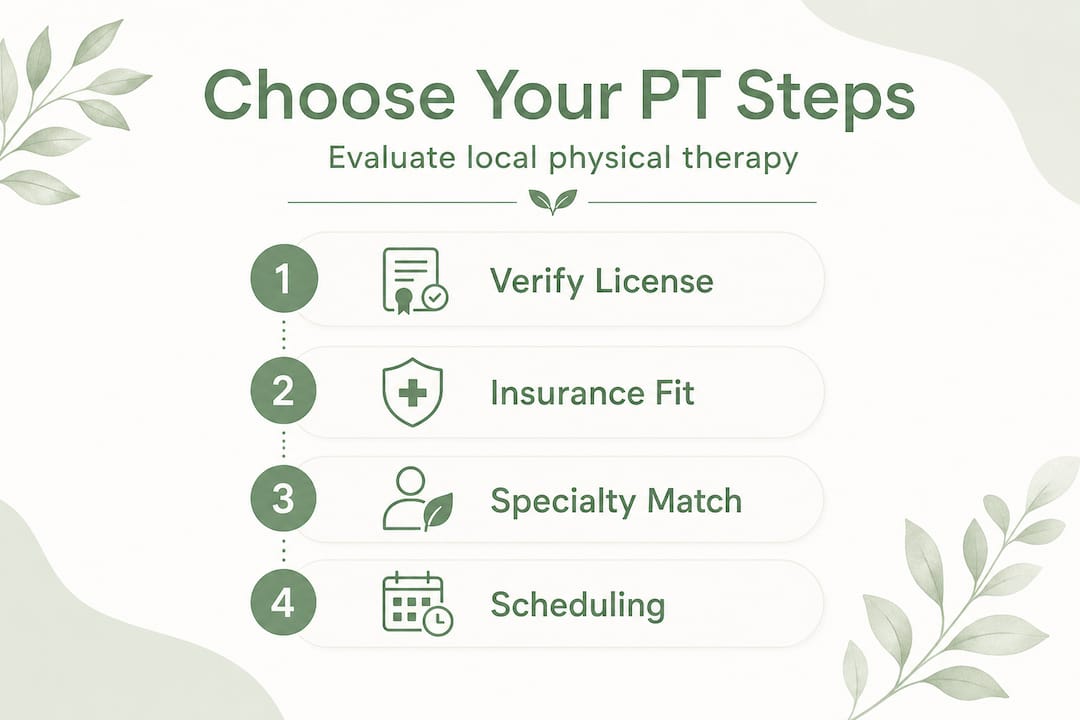
Step 2: Confirm insurance fit. Call the clinic directly and give them your plan name and member ID. Ask if they are in-network for your specific plan, not just the insurance company in general. Being “in-network with Aetna” is not the same as being in-network with your specific Aetna HMO Select plan.
Step 3: Match the specialty to your condition. Review the clinic’s therapy services offered and confirm they treat patients with your diagnosis regularly. Ask how many patients with similar conditions the clinic sees each month. Volume and experience often go hand in hand.
Step 4: Confirm scheduling and policies. Timing matters more than most people expect. If you’re post-surgical, a two-week delay in starting therapy can actually affect your healing. A practical shortlist for Queens and Nassau patients with Medicare or private insurance should confirm the PT is licensed, the clinic accepts your specific plan, your access rules are understood (referral requirements, in-network constraints), and you can start within about 1 to 2 weeks while understanding cancellation policies.
Here’s a summary of the key questions to ask each clinic during your initial call:
Question | Why it matters |
Is your PT licensed in New York State? | Confirms legal qualification to treat you |
Do you accept my specific insurance plan? | Avoids surprise bills later |
Do I need a referral before my first visit? | Prevents delays in starting care |
What conditions does your PT specialize in? | Ensures clinical match to your needs |
How soon can I schedule a first appointment? | Critical for post-surgical recovery timelines |
What is your cancellation or no-show policy? | Helps you plan your schedule responsibly |
Pro Tip: Ask the clinic how they handle it if your primary therapist is unavailable. Will a supervising PT or an aide take over? You want continuity of care, not a revolving door of different faces.
Following PT tips for faster recovery becomes much easier once you’re working with a therapist who is a good fit from day one.
Insurance and Medicare: What local patients need to check
After outlining how to compare options, let’s zoom in on the insurance rules that can shape your access. This is where many patients hit unexpected obstacles, and where a little advance research saves a lot of headaches.

HMO vs. PPO: The core difference. If you have an HMO, you generally need to stay within a specific network and often require a referral from your primary care physician before seeing any specialist, including a physical therapist. A PPO gives you more flexibility, allowing you to see out-of-network providers at a higher cost, and often does not require a referral. Original Medicare functions more like a PPO in this regard, offering broader access without referral requirements in most cases.
In-network vs. out-of-network. Going out-of-network can cost significantly more. Some plans cover 80% of an in-network visit but only 50% of an out-of-network one. For patients needing multiple sessions per week over several months, that difference adds up quickly. When evaluating clinics in the Queens and Nassau area, it’s important to verify plan-specific network access and whether you’ll have in-network access across the hospital systems you already use, since your plan type (HMO vs PPO vs Original Medicare with a supplement) can directly affect referrals and out-of-network flexibility.
Medicare coverage basics. Medicare Part B covers medically necessary outpatient physical therapy. There is no strict cap on the number of visits, but spending thresholds trigger extra review. When your therapy costs reach approximately $2,410 in a calendar year, your provider must submit additional documentation confirming that continued sessions are medically necessary. This is routine for many Medicare patients, but your clinic should know how to handle it smoothly.
Here are some key insurance considerations to keep in mind:
Always confirm the clinic accepts your specific plan, not just your insurance brand
Check if your plan requires a prior authorization for physical therapy visits
Understand your deductible and whether it applies before coverage kicks in
Ask about co-pay amounts per visit so you can plan your budget
If you have a Medicare Advantage plan, network rules may differ from Original Medicare
Skipping the step of verifying your specific plan and network access is the number one administrative mistake local patients make. It can result in delayed care, unexpected bills, and having to restart the referral process from scratch, sometimes weeks after you first walked into a clinic.
A holistic approach to PT works best when you aren’t distracted by billing surprises halfway through your treatment plan.
What personalized physical therapy should look like
Now that your paperwork and logistics are set, it’s time to recognize what great, personalized care looks like in action. Not all physical therapy is created equal. Generic, one-size-fits-all programs often produce slower results and less patient satisfaction.
Your first visit should include a thorough evaluation. A qualified PT will spend your initial session understanding your full history, not just your current complaint. They’ll assess your strength, range of motion, functional movement, and pain levels. They’ll ask about your lifestyle, your job, and your specific goals for therapy. Personalized physical therapy should include an initial evaluation by a physical therapist, tailoring of the plan to your goals, and active monitoring and adjustment rather than generic care.
Signs of a truly personalized approach. You should leave your first visit with a written or clearly explained treatment plan that is specific to your condition and goals. Your PT should explain why each exercise or technique is being used and what outcome they’re targeting. If you’re given the same generic handout sheet that every patient receives, that’s a warning sign.
Ongoing care should include regular reassessments. A good PT will adjust your program as you improve, rather than running you through the same routine for weeks on end. Communication should flow both ways: your therapist should check in with you about pain levels, fatigue, and progress, and you should feel comfortable raising concerns.
Here are some questions that can help you get better outcomes:
“What are the specific goals for my treatment plan, and how will we measure progress?”
“How often do you expect to reassess and update my program?”
“What should I be doing at home between sessions to support my recovery?”
“Are there any activities I should avoid that could slow my healing?”
“How will you communicate with my doctor or surgeon about my progress?”
The importance of expert PT becomes most clear when you experience care that truly adapts to you, rather than fitting you into a standard template.
Pro Tip: Before your first appointment, write down your top three health goals in plain language, such as “walk up stairs without pain” or “return to tennis in three months.” Sharing this list with your PT helps them design a program that stays focused on what matters most to you.
A local perspective: What most guides miss about choosing physical therapy
Most articles about choosing a physical therapist focus on clinical quality, certifications, and whether someone has great reviews. Those things matter. But in Queens and Nassau County, the local reality adds another layer that most guides simply don’t address.
Administrative details often matter more than clinical differences. The truth is that most licensed, experienced physical therapists in this area are clinically competent. What separates a smooth recovery experience from a frustrating one is often scheduling speed, referral handling, and billing clarity. A clinic that answers the phone promptly, processes your referral within 48 hours, and proactively handles Medicare documentation is worth more than a slightly more credentialed one that takes three weeks to get you in the door.
Fast scheduling is a bigger priority than most patients realize. When we talk to patients across Queens and Nassau, one of the most consistent pieces of feedback is that the ability to start quickly is a top priority, often more important than location. A clinic that can see you within a week, especially after a procedure, beats a more conveniently located one that has a three-week wait.
Plan for the network and referral maze before it derails you. If you see multiple specialists across different hospital systems, an insurance plan’s network and referral rules can change whether PT access is smooth or administratively difficult. That’s why you should verify your specific doctors and hospitals, not just the plan name. This is the edge case that catches patients off guard most often. One patient’s cardiologist at one hospital system and orthopedic surgeon at another can create a tangle of network rules that nobody warned them about.
If you’re still working through the selection process, our common PT selection questions resource gives you a clear framework for narrowing down your choices confidently.
Next steps: Find the right physical therapist near you
To simplify your search, here’s how to quickly connect with trusted local providers for your first visit.
At Contemporary Rehab Services, we specialize in personalized, one-on-one physical therapy for patients across Queens and Nassau County. We accept Medicare, Aetna, Cigna, Emblem, and United Healthcare plans, and our team is experienced in helping patients navigate referrals and insurance verification before their first appointment. We believe your first session should feel focused on you, not on paperwork.
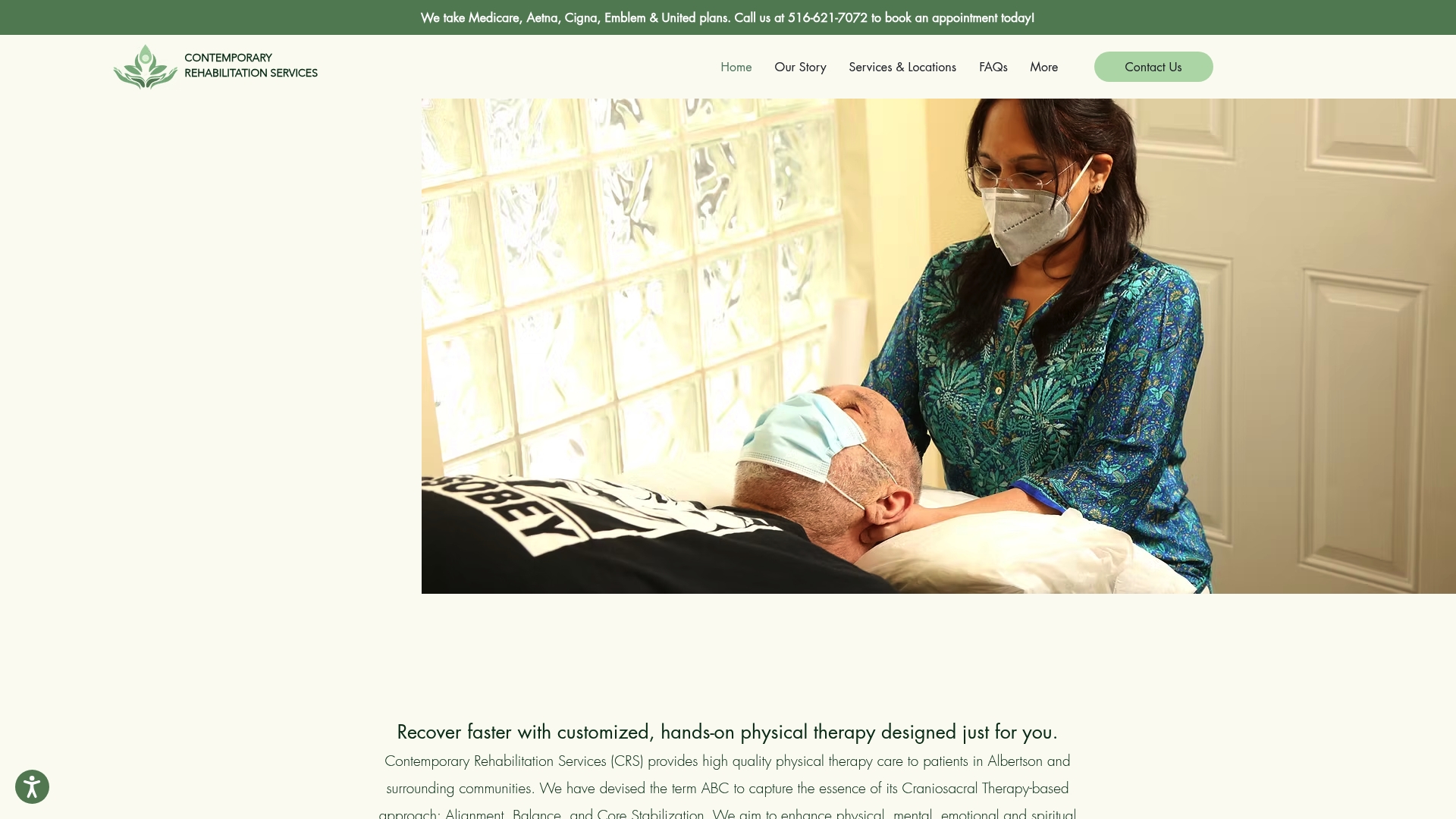
Our full range of services covers orthopedic, neurological, and sports-related conditions, all delivered in a boutique clinic setting where you see the same therapist every visit. Whether you’re closest to our Searingtown therapy location or prefer our Albertson therapy location, our team is ready to get you started quickly, often within a week. Call us today or request an appointment online to take the first step toward a recovery plan built around your specific needs and goals.
Frequently asked questions
What questions should I ask a physical therapy clinic before booking?
Ask if the PT is licensed, if they specialize in your condition, if they accept your insurance, how soon you can start, and details about cancellation policies. As the IPTA recommends, you should also confirm you can choose who is on your care team and that care is provided by a licensed physical therapist.
How soon after surgery should I begin physical therapy?
Ideally, you should begin physical therapy within about one to two weeks after surgery for the best possible outcomes. Choosing a clinic that can see you quickly is critical, so ask about availability and cancellation policies during your first call.
Does Medicare limit the number of physical therapy sessions?
Medicare Part B covers medically necessary outpatient physical therapy without a strict session cap, but spending thresholds around $2,410 trigger additional documentation requirements that your provider must submit to justify continued care.
Why does insurance network affect which physical therapist I can use?
Your network determines which providers are covered at the best rate and whether you need a referral, so always verify both your plan details and your doctors. Plan type and hospital system affiliations can significantly affect your out-of-pocket costs and access to specific clinics.
Recommended
Comments