
Physical therapy in rehabilitation: Your path to recovery
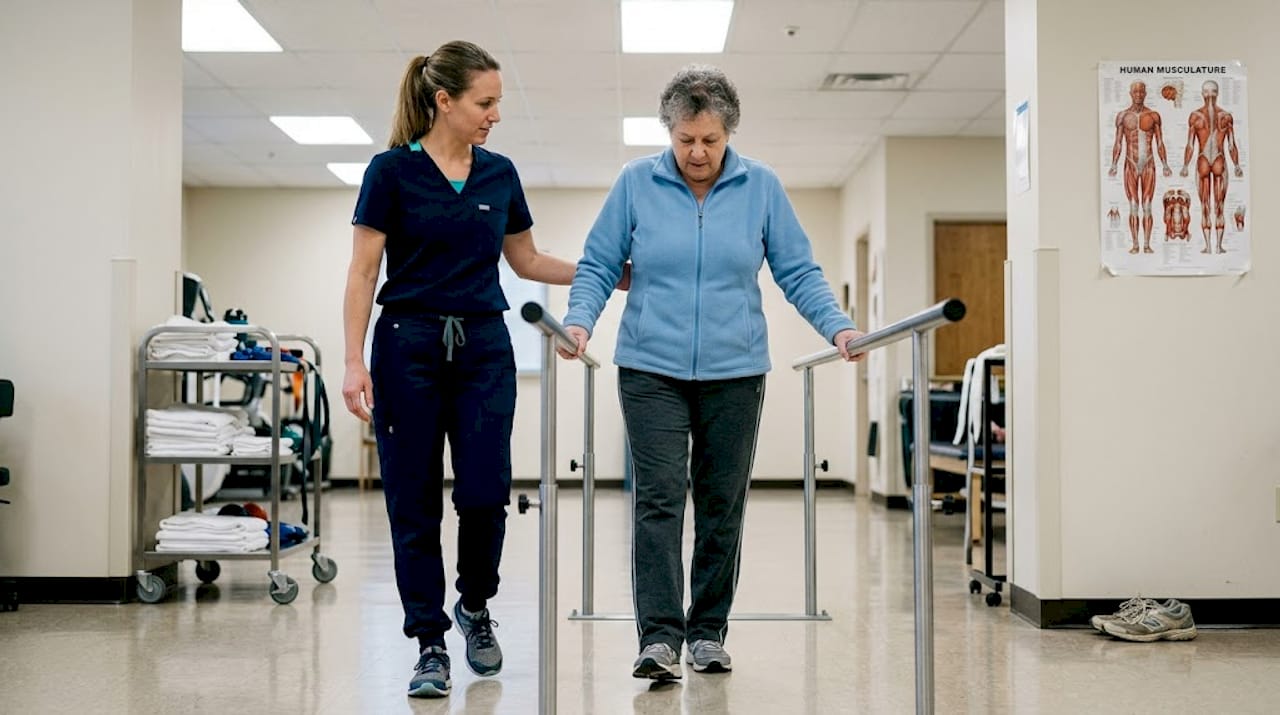
Many people assume that rest is the fastest road back to health after an injury or surgery. That belief is understandable, but it’s also one of the most common reasons recoveries stall. Physical therapists play a central role in rehabilitation by restoring joint function, muscle strength, balance, and coordination through targeted, evidence-backed techniques. Whether you’re recovering from a knee replacement in Nassau County, managing chronic back pain in Queens, or exploring holistic options like craniosacral therapy, this guide walks you through what physical therapy actually does, what the science says, and how it compares to other treatment paths.
Table of Contents
Key Takeaways
Point | Details |
PT drives functional recovery | Physical therapists use proven techniques to restore movement, strength, and independence after injury or surgery. |
Evidence supports task-specific rehab | High-intensity, targeted exercise yields the best outcomes, especially for stroke and neurological conditions. |
PT outperforms medications for pain | Physical therapy methods often provide better pain relief and function than drugs in cases of chronic and disc-related back pain. |
Craniosacral therapy is complementary | CST may offer short-term relief but works best when paired with evidence-based PT. |
What physical therapists do in rehabilitation
Rest alone won’t rebuild the muscle memory, joint stability, or neural pathways that injury disrupts. Physical therapists take an active, structured approach to getting you moving again, and doing so safely. Understanding what they actually do in a session helps you become a more engaged, informed patient.
Physical therapists improve joint and muscle function, range of motion, strength, balance, ambulation, and coordination through techniques like progressive resistive exercise, proprioceptive neuromuscular facilitation (PNF), coordination exercises, and ambulation training. PNF, for example, uses specific patterns of movement combined with resistance to retrain the nervous system and restore functional motion. It’s especially effective after strokes, orthopedic surgeries, and sports injuries where the brain-to-muscle connection has been disrupted.
Here’s a breakdown of the core goals physical therapists address and the methods they use to reach them:
Rehabilitation goal | Primary PT technique |
Restore range of motion | Stretching, joint mobilization |
Build muscle strength | Progressive resistive exercise |
Improve balance and coordination | PNF, proprioception training |
Restore walking ability | Ambulation training, gait retraining |
Reduce pain | Manual therapy, therapeutic modalities |
Regain daily function | Task-specific training, ADL practice |
The range of conditions that benefit from PT is broad. For someone recovering from a stroke, PT focuses on relearning movement patterns and rebuilding the neural connections that control limb movement. For a patient after knee replacement, the focus shifts to PT for knee recovery, including reducing swelling, restoring flexion, and gradually rebuilding quadriceps strength. For those dealing with chronic pain, PT targets the underlying movement dysfunctions that keep the pain cycle going.
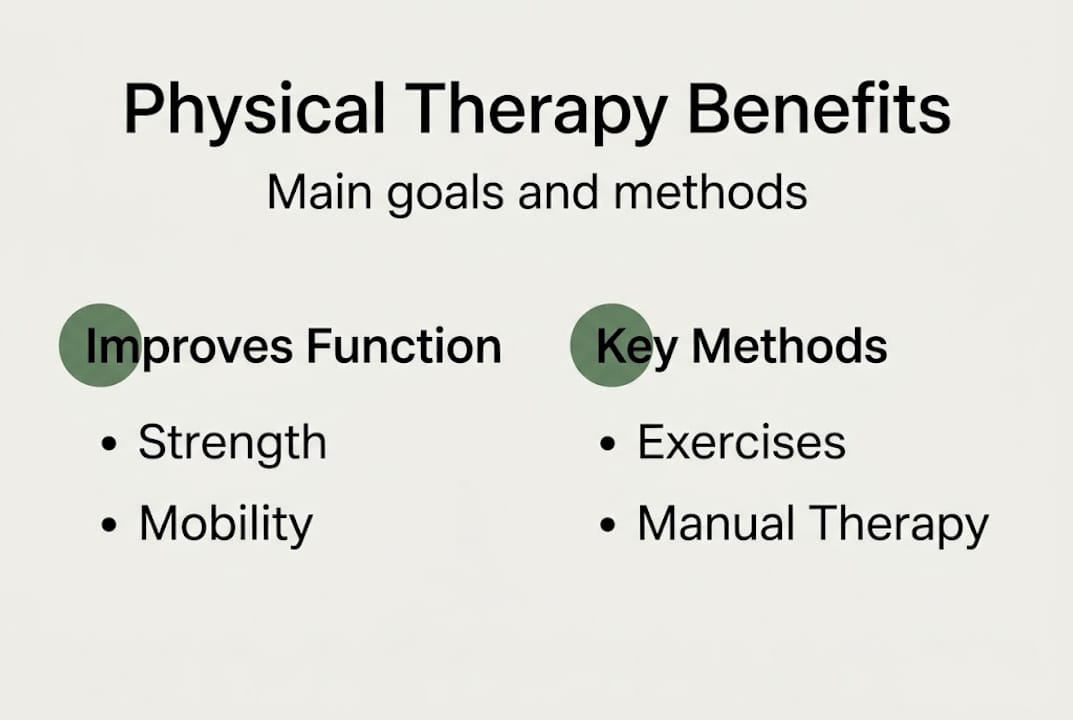
Physical therapists also address posture and alignment, which are often overlooked contributors to pain and limited mobility. Poor posture from years of desk work, for instance, can create muscular imbalances that lead to neck pain, headaches, and shoulder problems. Improving balance and alignment through targeted exercises corrects these patterns before they become chronic problems.
Key benefits patients in Queens and Nassau County commonly report after consistent PT include:
Faster return to daily activities and work
Reduced reliance on pain medications
Improved confidence in movement after injury or surgery
Better long-term outcomes compared to passive rest alone
Decreased risk of re-injury through strength and coordination training
Pro Tip: Before your first PT session, write down your top three functional goals, whether that’s climbing stairs without pain, returning to tennis, or simply sleeping through the night. Sharing these goals with your therapist helps them design a program that targets what matters most to you, not just what shows up on an imaging report.
Scientific evidence: How PT methods improve recovery
With an understanding of PT’s core role, it’s essential to see what the science actually reveals about its effectiveness. The research is clear in some areas and still evolving in others, but the overall picture strongly supports PT as a first-line treatment for a wide range of conditions.
One of the most well-supported findings involves locomotor rehabilitation after neurological injuries. High-intensity task-specific walking training at moderate to high cardiovascular intensities improves walking speed and distance in chronic stroke, incomplete spinal cord injury (SCI), and traumatic brain injury (TBI) patients more than six months post-injury. Importantly, the same guidelines caution against body-weight supported treadmill or robotic training as primary interventions, since the evidence for those approaches is weaker.
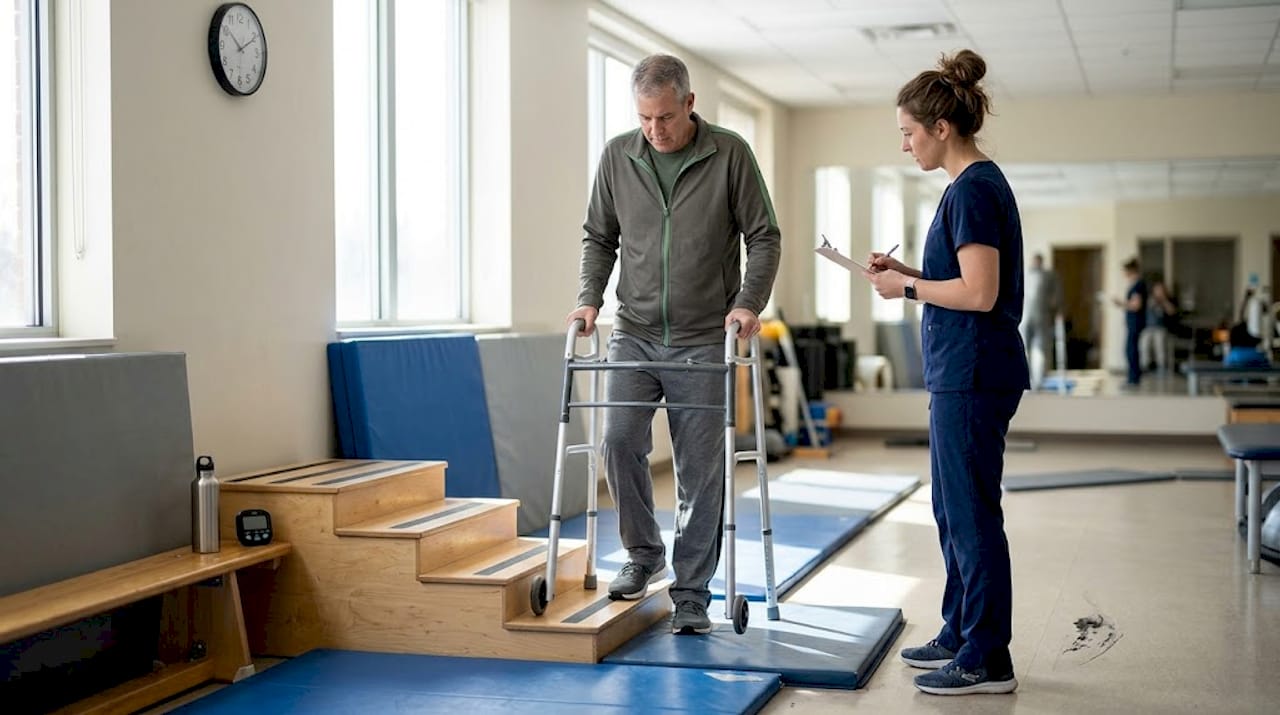
This matters for patients and families making decisions about care. Not all rehabilitation technologies are equal, and the intensity and specificity of training make a measurable difference.
Stat callout: Higher PT dose in the early subacute stroke phase associates with significantly better upper limb dexterity recovery. Specifically, the probability of achieving a Box and Block Test score above 31 (a standard measure of hand function) rises from 46% at 10 hours of PT to 76% at 20 hours. That’s a 30-percentage-point improvement simply by increasing the dose of therapy.
Here’s what the strongest evidence supports, in order of confidence:
Task-specific training produces the best functional gains because it trains the exact movements patients need to perform in daily life.
High-intensity cardiovascular exercise during locomotor rehab improves walking outcomes in neurological patients more than low-intensity alternatives.
Progressive resistive exercise consistently builds strength across orthopedic and neurological populations.
Balance and proprioception training reduces fall risk and improves confidence in older adults and post-surgical patients.
Manual therapy combined with exercise outperforms either approach alone for many musculoskeletal conditions.
The rehabilitation intensity impact is something many patients underestimate. It’s tempting to think that gentle, comfortable sessions are safer or more appropriate, especially early in recovery. But the evidence consistently shows that appropriately challenging therapy, calibrated to your current capacity, drives better results than conservative, low-effort approaches.
PT intervention | Best evidence for | Strength of evidence |
Task-specific walking training | Stroke, SCI, TBI | Strong |
Progressive resistive exercise | Orthopedic injuries, post-surgical | Strong |
Manual therapy plus exercise | Low back pain, neck pain | Moderate to strong |
Balance and proprioception training | Falls prevention, post-surgical | Moderate |
Body-weight supported treadmill | Neurological rehab | Weak |
For those considering increased PT dosage benefits at our Albertson clinic, the research supports starting early and committing to the recommended frequency. Skipping sessions or reducing intensity to “take it easy” can meaningfully slow your progress.
Physical therapy vs. other treatments: Pain, mobility, and outcomes
Once you understand the scientific benefits, it’s also smart to compare how PT stacks up against other common rehabilitation strategies. Medications and psychological approaches like cognitive behavioral therapy (CBT) are frequently used alongside or instead of PT, and knowing when each works best helps you make informed decisions with your care team.
For chronic low back pain, one of the most common reasons people seek physical therapy in Nassau County and Queens, the research offers a nuanced picture. PT provides modest improvements in chronic low back pain function compared to CBT, with gains specifically in anxiety, fatigue, pain interference, sleep quality, and social role participation. This means PT and CBT each address different dimensions of chronic pain, and the best outcomes often come from using both together.
When it comes to pain relief specifically, PT has a clear edge over medications for certain conditions. Mechanical PT methods such as multiple impulse therapy, McKenzie method, and traction are superior to pharmacotherapy for pain relief in discogenic low back pain, meaning back pain caused by disc problems. This is significant because many patients default to pain medications as a first step, when PT may actually deliver better results with fewer side effects.
“Mechanical physical therapy methods, including multiple impulse therapy, McKenzie technique, and traction, demonstrate superior analgesia compared to pharmacotherapy for discogenic low back pain, supporting PT as a primary rather than secondary intervention.” — Research published in PMC/NCBI
Here’s a practical guide to choosing between approaches based on your situation:
Choose PT first when your pain is related to movement, posture, muscle weakness, or a specific injury or surgery. PT addresses the mechanical cause, not just the symptom.
Consider CBT alongside PT when chronic pain has begun affecting your mood, sleep, or ability to participate in social activities. CBT helps rewire the psychological response to pain.
Use medications short-term for acute flare-ups or post-surgical pain management, but avoid relying on them as the primary long-term strategy for musculoskeletal conditions.
Combine approaches for complex cases involving both physical and psychological components, such as chronic pain syndromes or pain following a traumatic injury.
For a deeper look at how PT addresses these issues, the chronic neck and back pain guide on our website breaks down condition-specific strategies in plain language.
Pro Tip: If you’re currently managing pain with medication and want to reduce your dependence on it, talk to your physical therapist about a structured transition plan. PT and medication can work together in the short term, with PT gradually taking over as the primary pain management tool as your strength and function improve.
The role and limits of craniosacral therapy in rehabilitation
For those interested in holistic approaches, let’s look at where craniosacral therapy fits alongside standard PT in the rehab journey. Craniosacral therapy, or CST, is a gentle hands-on technique that focuses on the bones of the skull, spine, and sacrum, as well as the membranes and fluid surrounding the brain and spinal cord. Practitioners use very light touch to release tension and improve the flow of cerebrospinal fluid, aiming to reduce pain and promote relaxation.
CST is not a replacement for evidence-based physical therapy. But for certain patients, it can serve as a meaningful complement. CST shows preliminary positive effects for short-term pain relief in conditions like multiple sclerosis-related pain and headaches, as well as for stress reduction. However, the evidence is limited and mixed, the mechanisms are still debated, and it is not considered a mainstream PT intervention.
Contrasting expert perspectives from meta-analyses confirm that while CST shows promise in some studies, the overall body of evidence remains inconclusive, and larger randomized controlled trials are needed before strong recommendations can be made.
Here’s what patients in Queens and Nassau County should know before adding CST to their rehabilitation plan:
When CST might help: Short-term pain relief for headaches, neck tension, TMJ-related discomfort, and stress-related physical symptoms. Some patients find it deeply relaxing and report reduced anxiety after sessions.
Conditions with preliminary support: Headache management, stress and anxiety reduction, and mild pain associated with neurological conditions.
Limitations to keep in mind: CST should not replace PT for functional rehabilitation goals like restoring strength, balance, or walking ability. The evidence base is not yet strong enough to use it as a standalone treatment.
Questions to ask your provider: Ask about their training and credentials in CST, how they plan to integrate it with your overall PT program, and what specific outcomes you can realistically expect.
For more on how this approach works in practice, CST for pain relief and reducing stress with CST are helpful starting points. If you’re curious about what a session actually looks like, our CST clinic experience page gives you a clear picture of what to expect.
A physical therapist’s take: What actually works in real rehabilitation
After evaluating the evidence, here’s a frank perspective on what truly makes the difference in rehabilitation, because it’s often not what patients expect.
The exercises matter. The techniques matter. But what separates patients who recover well from those who plateau is something harder to measure: engagement. Patients who ask questions, communicate honestly about pain and progress, and show up consistently, even when it’s uncomfortable, recover faster. That’s not motivational talk. It reflects what how expert guidance changes recovery looks like in practice.
We’ve also seen that patients who expect a quick fix often disengage too early, right when the hardest and most important work begins. Deliberate, progressive effort over weeks and months outperforms any single technique or technology. PT is the evidence-based core of rehabilitation. CST can add value for specific patients in specific situations, but it works best when layered thoughtfully onto a solid PT foundation, not used as a shortcut around it. Honest provider-patient communication about goals, limitations, and realistic timelines is what makes individualized plans actually work.
Ready to begin your rehabilitation journey in Queens or Nassau?
If you’re ready to move from information to action, here’s how to find expert rehab help in your area.
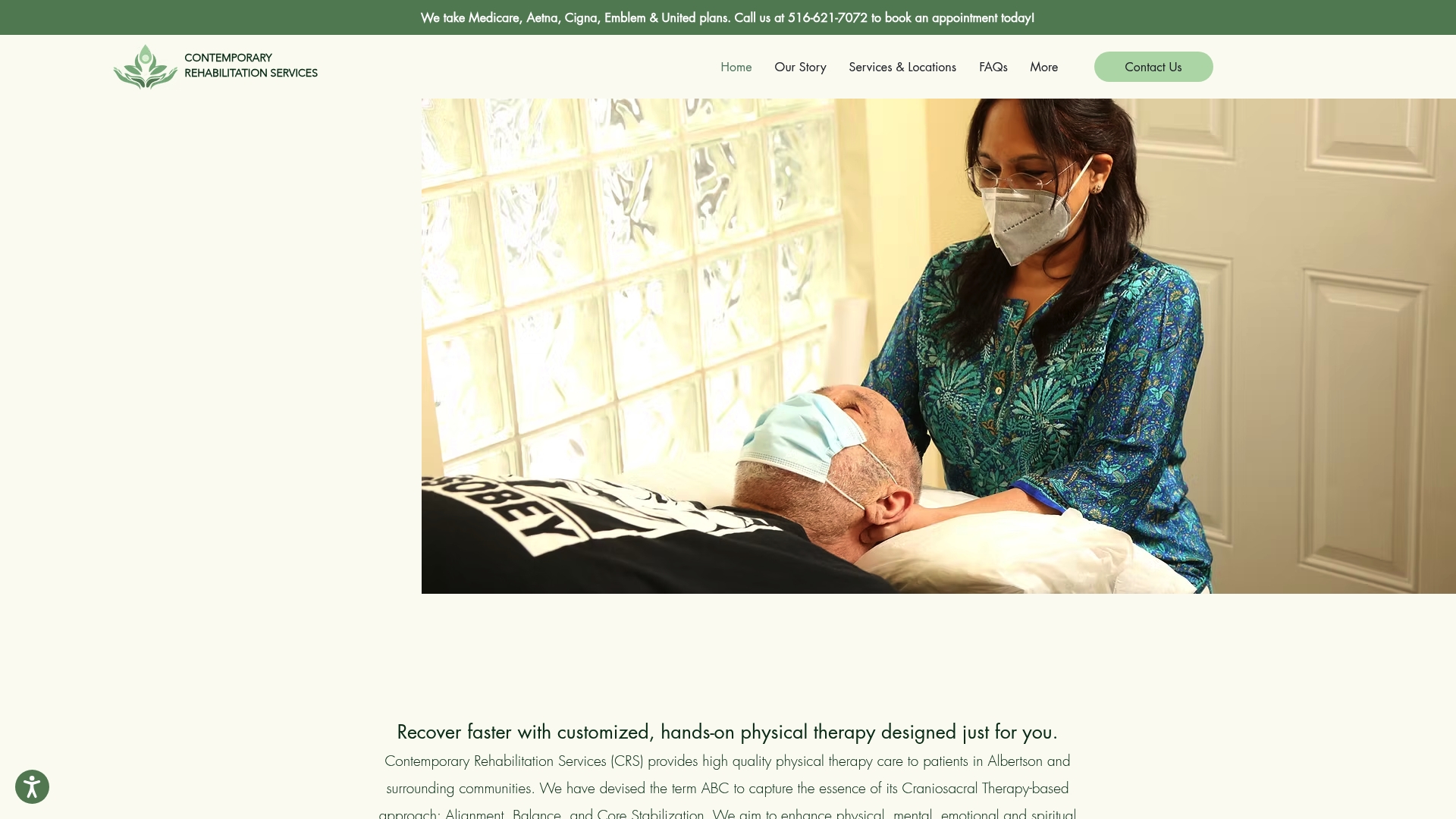
At Contemporary Rehab Services, we offer specialized physical therapy and craniosacral therapy at our boutique clinic in Albertson, NY, serving patients across Nassau County and Queens. Whether you’re recovering from surgery, managing a chronic injury, or exploring CST as part of a broader wellness plan, our team builds individualized programs around your goals. We accept Medicare, Aetna, Cigna, Emblem, and United Healthcare plans. If you’re located in Roslyn or nearby communities, explore physical and craniosacral therapy in Roslyn, or visit our main rehab and CST in Albertson page to schedule your first consultation today.
Frequently asked questions
What are the main benefits of working with a physical therapist after injury or surgery?
PTs improve joint function, range of motion, strength, balance, and coordination through targeted rehabilitation techniques, helping you regain independence and return to daily activities faster than rest alone.
Is physical therapy more effective than medication for treating back pain?
For disc-related low back pain, mechanical PT methods outperform pharmacotherapy for pain relief, making PT a stronger primary intervention than relying on medications alone.
When is craniosacral therapy appropriate for rehab?
CST shows short-term benefits for pain and stress in conditions like headaches and MS-related discomfort, but it works best as a complement to evidence-based physical therapy rather than a replacement.
Does the amount of physical therapy matter for recovery?
Yes, significantly. Higher PT dose in early subacute stroke recovery is directly linked to better upper limb dexterity outcomes, with more hours of therapy producing measurably higher functional scores.
Recommended
Comments