
Role of PT in Pain Management: Restore Function Naturally
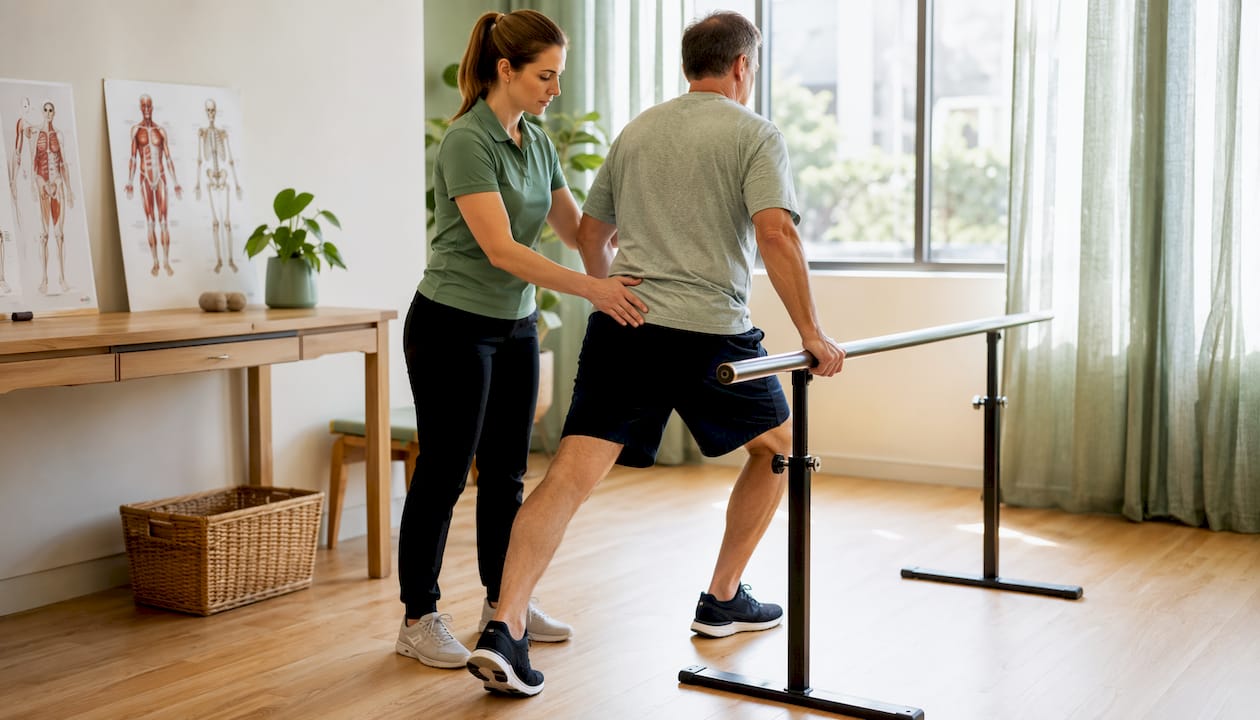
Physical therapy is a primary, evidence-backed, non-opioid approach that reduces chronic pain by restoring movement and addressing the physical, psychological, and behavioral factors that keep pain going. If you’re living with chronic musculoskeletal pain and wondering whether there’s a path forward that doesn’t start and end with medication, PT is worth understanding clearly.
PT focuses on movement and self-management. Rather than masking pain, physical therapists work with you to rebuild the strength, mobility, and confidence your daily life requires.
Professional bodies and patient-facing health resources support PT. The American Physical Therapy Association (APTA) positions PT as a safe, clinically supported alternative to opioids, and Harvard Health reporting reflects the same consensus.
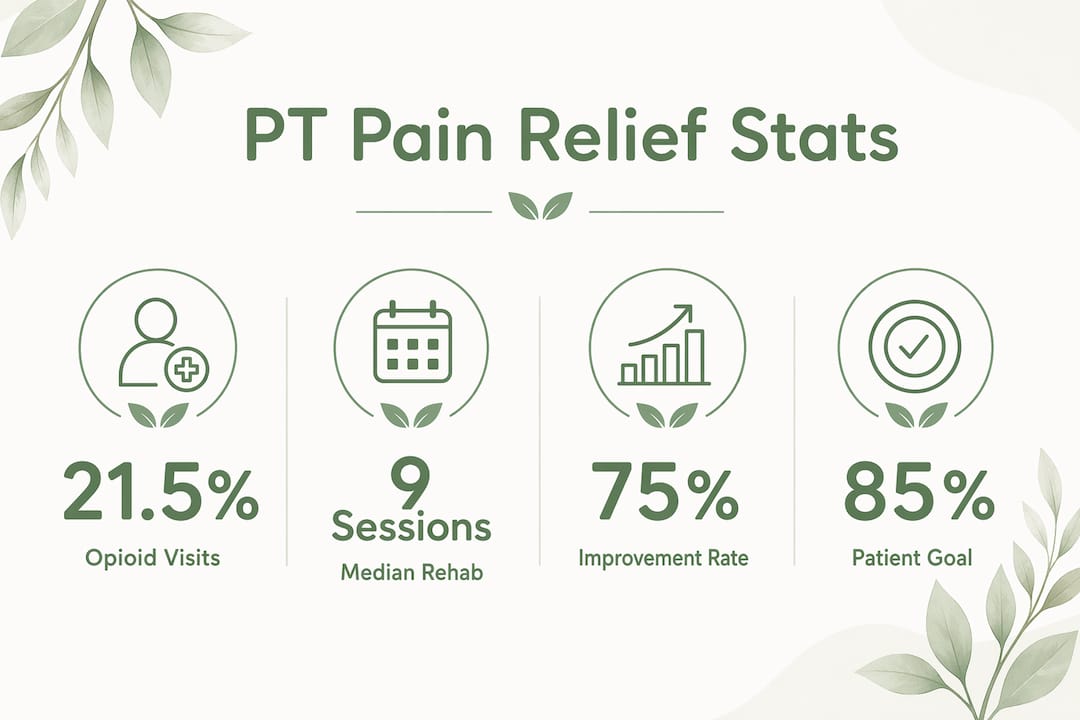
PT can reduce opioid reliance and deliver real functional gains. Research shows that patients with low back pain who saw a physical therapist first reduced their likelihood of receiving an opioid prescription by 87% compared with those who never visited a physical therapist.
People with chronic musculoskeletal pain who want to get back to walking, working, or simply sleeping through the night benefit most. The next step is booking an evaluation.
Table of Contents
How do physical therapists actually approach pain?
Physical therapists are movement specialists. Their primary goal is restoring the functional independence you need for your daily life, with pain as one important part of a larger picture rather than the only target.
The clinical framework most PTs use today is the biopsychosocial model. This means your therapist looks beyond the injured tissue to understand how your beliefs about pain, stress levels, sleep, and movement habits all interact to shape what you feel. A patient who avoids walking because they fear it will cause damage, for example, often develops more pain over time, not less. Addressing that fear directly is part of the treatment.
A typical first encounter involves a detailed history, movement assessment, and goal-setting conversation. Your therapist will ask what you want to be able to do again, not just how much it hurts. Those value-based goals, like lifting a grandchild or climbing stairs without gripping the railing, become the real measure of progress.

Pro Tip: Manual therapy (hands-on joint and soft tissue work) is most effective when it’s used as a short-term “window” before active exercise. Research shows its pain-relieving effects work largely through neurophysiological pathways, not structural change, which means the real gains come from the movement you do while that window is open.
What PT interventions are used for chronic musculoskeletal pain?
Most PT programs for chronic pain draw from a core set of interventions, often combined and adjusted as you progress.
Therapeutic exercise builds strength, sensorimotor control, and endurance. Studies show that people who exercise regularly experience less pain, and PTs design programs specific to your deficits and goals.
Pain neuroscience education (PNE) teaches you how pain actually works in the nervous system. When combined with active interventions, PNE reduces catastrophizing and fear of movement, and improves physical performance more than education alone.
Graded activity and pacing gradually increases what you do over time, preventing the boom-bust cycle many people with chronic pain fall into.
Manual therapy provides short-term pain relief and improved mobility as an adjunct to active care. Learn more about manual therapy for pain relief and how it fits into a full program.
Functional retraining rebuilds the specific movements your daily life demands, from bending and lifting to walking longer distances.
Advanced options in specialized pain clinics include cognitive functional therapy, desensitization, virtual reality, and graded activity pacing for complex cases.
Intervention | Primary short-term benefit | What you need to do |
Therapeutic exercise | Strength and pain reduction | Complete home exercise program daily |
Pain neuroscience education | Reduced fear of movement | Engage actively, ask questions |
Graded activity/pacing | Increased tolerance without flare | Track activity levels, follow pacing plan |
Manual therapy | Short-term pain relief and mobility | Attend sessions, move during the window |
Functional retraining | Task-specific recovery | Practice target movements between visits |
What does the research say about PT’s effectiveness?
PT produces clinically meaningful improvements in pain, function, and overall health for many people with chronic musculoskeletal pain. The evidence base is substantial.
More than 50 million Americans seek physical therapy each year, participating in an estimated 300 million total therapeutic sessions annually — making it one of the most widely used non-surgical treatments in the country.
Despite that scale, PT remains underutilized relative to opioid prescribing. National Ambulatory Medical Care Survey data shows that opioid prescriptions appeared in 21.5% of ambulatory visits for new chronic musculoskeletal pain, compared with PT referrals in only 10.0% of visits. That gap represents a real opportunity for earlier, safer care.
A physiotherapist-led rehabilitation program for refractory chronic musculoskeletal pain found that after a median of nine sessions over five months, about half of patients reported clinically important improvements at discharge and at one-year follow-up. Practice guidelines also consistently recommend exercise, education, and active rehabilitation as first-line care for many musculoskeletal conditions.
Metric | Value | Source |
Opioid prescriptions in MSK visits | 21.5% of visits | National Ambulatory Medical Care Survey |
PT referrals in MSK visits | 10.0% of visits | National Ambulatory Medical Care Survey |
Median sessions in refractory MSK program | nine sessions | Physiotherapist-led rehabilitation study |
Median program duration | 5 months | Physiotherapist-led rehabilitation study |
Opioid prescription reduction (PT-first, low back pain) | substantially lower likelihood | APTA Beyond Opioids white paper |
What does a PT program actually look like for you?
The pathway is straightforward: evaluation, individualized plan, regular supervised sessions, and a home program running alongside clinic visits. Most people see measurable gains within weeks to months, depending on how complex their condition is.
Initial evaluation. Your therapist takes a full history, identifies your movement limitations, and asks about your functional goals. This visit sets the direction for everything that follows.
Individualized treatment plan. Based on the evaluation, your therapist designs a program combining the interventions most likely to help you specifically, not a generic protocol.
Regular supervised sessions. Frequency varies, but most programs involve one to three visits per week. The nine-session median from physiotherapist-led research gives a realistic benchmark for refractory cases, though simpler presentations often resolve faster.
Re-evaluation checkpoints. Your therapist monitors progress against your functional goals and adjusts the plan when needed.
Home program. Active patient engagement between sessions is one of the strongest predictors of long-term success. Your home exercises are not optional extras.
Access and insurance notes: Most U.S. states allow direct access to PT without a physician referral. Contemporaryrehabservices accepts Medicare, Aetna, Cigna, Emblem, and UnitedHealthcare. Check your specific plan for visit limits and any prior authorization requirements before your first appointment.
When is PT not enough on its own?
PT is central to chronic pain care, but it is not universally sufficient. Some situations call for a broader team or urgent medical attention.
“Physical therapists must become central to this multidisciplinary strategy” — APTA Beyond Opioids white paper, noting that HHS recognized the importance of PTs’ role in multidisciplinary pain management teams for restorative therapy.
Combined care is often needed when someone has severe opioid dependence requiring a supervised taper, complex regional pain syndrome, rapidly progressive neurologic signs, or an uncontrolled systemic disease driving the pain. In those cases, PT participates as part of an interdisciplinary team alongside physicians, psychologists, and social workers.
Seek urgent medical evaluation for sudden unexplained weakness, loss of bowel or bladder control, signs of infection (fever with spine pain), or pain following significant trauma. These are red flags that need assessment before PT begins or continues.
How do you find the right physical therapist for chronic pain?
Prioritize therapists who emphasize active management, pain neuroscience education, and goal-focused plans rather than passive treatments alone. The role of PT in chronic disease management is well established, but the quality of care varies by clinician.
When you contact a clinic, ask whether the therapist has experience treating chronic musculoskeletal pain using a biopsychosocial approach. Ask what percentage of the program involves active exercise versus passive modalities. Ask whether they measure progress using functional goals, not just pain scores. Ask about telehealth options if attendance is a barrier. A good clinic will answer these questions directly and confidently.
Credential cues worth noting: APTA membership and any specialty certifications in orthopedics (OCS) or pain science signal ongoing professional development. The APTA’s ChoosePT directory is a practical starting point for finding licensed therapists in your area.
Pro Tip: Ask the therapist for one concrete example of a functional goal a recent patient regained. The specificity of the answer tells you a great deal about how patient-centered their clinical reasoning actually is.
What can you do between PT sessions to keep progressing?
Daily, manageable active movement combined with pain education and pacing is the most reliably helpful self-management approach. What you do between sessions often determines how quickly you improve.
Graded walking: Start with a distance that feels comfortable and add small increments every few days. Consistency matters more than intensity.
Prescribed home exercises: Do them as directed, even on days when you feel better. Skipping reinforces the pain-avoidance cycle.
Breathing and relaxation for flare management: Slow diaphragmatic breathing during a pain flare activates the parasympathetic nervous system and can reduce perceived intensity without medication.
Sleep and stress hygiene: Sleep deprivation increases pain sensitivity. Prioritizing consistent sleep and managing daily stress are legitimate parts of your pain relief program, not soft extras.
Pacing: If an activity causes a significant flare lasting more than a day, scale back slightly and build more gradually. Contact your therapist before making major changes to the plan.
Key Takeaways
Physical therapy is the most evidence-supported non-opioid option for chronic musculoskeletal pain, combining movement, education, and self-management to restore function and reduce reliance on medication.
Point | Details |
PT is a non-opioid first-line option | APTA and clinical guidelines recommend PT as a safe, effective alternative to opioids for chronic MSK pain. |
Realistic timeline | A median of nine sessions over five months produced clinically important improvements in a refractory MSK program. |
Opioid prescribing outpaces PT referrals | Opioid prescriptions appeared in 21.5% of MSK visits, while PT referrals occurred in only 10.0%, showing PT is underutilized. |
Functional goals over pain scores | Progress is best measured by what you can do again, not just a number on a pain scale. |
Home program adherence drives outcomes | Active engagement between sessions is one of the strongest predictors of long-term success. |
Why PT for chronic pain deserves more credit than it gets
Most people arrive at PT after months of trying other things. By then, they’ve often been told their pain is “just” something to manage, and they’ve internalized that message. What strikes me about the evidence is how consistently it points in the opposite direction: PT, when delivered well and started early, changes the trajectory of chronic pain in ways that medication alone rarely does.
The lower rate of opioid prescriptions among patients with new chronic musculoskeletal pain who are referred to physical therapy reflects a fundamental difference in how the problem is being addressed. Opioids modulate the experience of pain; PT changes the underlying movement patterns, beliefs, and behaviors that perpetuate it. Those are not equivalent interventions.
What gets underestimated is the role of the therapeutic relationship and goal-setting in that first session. Patients who leave the evaluation with a clear, personally meaningful functional goal, not just a pain score to reduce, tend to engage more fully with their home program and show up to sessions with a different mindset. The research on value-based goals supports this, and it’s something any good PT can implement without additional equipment or cost.
If you’re in Nassau County or Queens and ready to take that first step, Contemporaryrehabservices offers individualized PT programs at our Albertson, NY clinic, accepting Medicare, Aetna, Cigna, Emblem, and UnitedHealthcare. View our full range of services to find the right fit for your goals.
Useful sources and further reading
Physical Therapy: Myths vs. Reality — Harvard Health
Beyond Opioids: How Physical Therapy Transforms Pain Management — APTA
APTA Pain Management overview
Physiotherapist-led rehabilitation for chronic MSK pain — PMC
Musculoskeletal Pain: Current and Future Directions of PT Practice — PMC
Physical therapy and opioid use for MSK pain — PMC
Specialist physiotherapy in a pain management clinic — PMC
Discuss any of these sources with your clinician if you want the evidence cited verbatim for your specific condition. This article is general health information, not a substitute for professional medical advice. Confirm current treatment guidelines and coverage details with your provider or insurer for your own situation.
Recommended
Comments