
Benefits of Manual Therapy for Pain Relief and Mobility
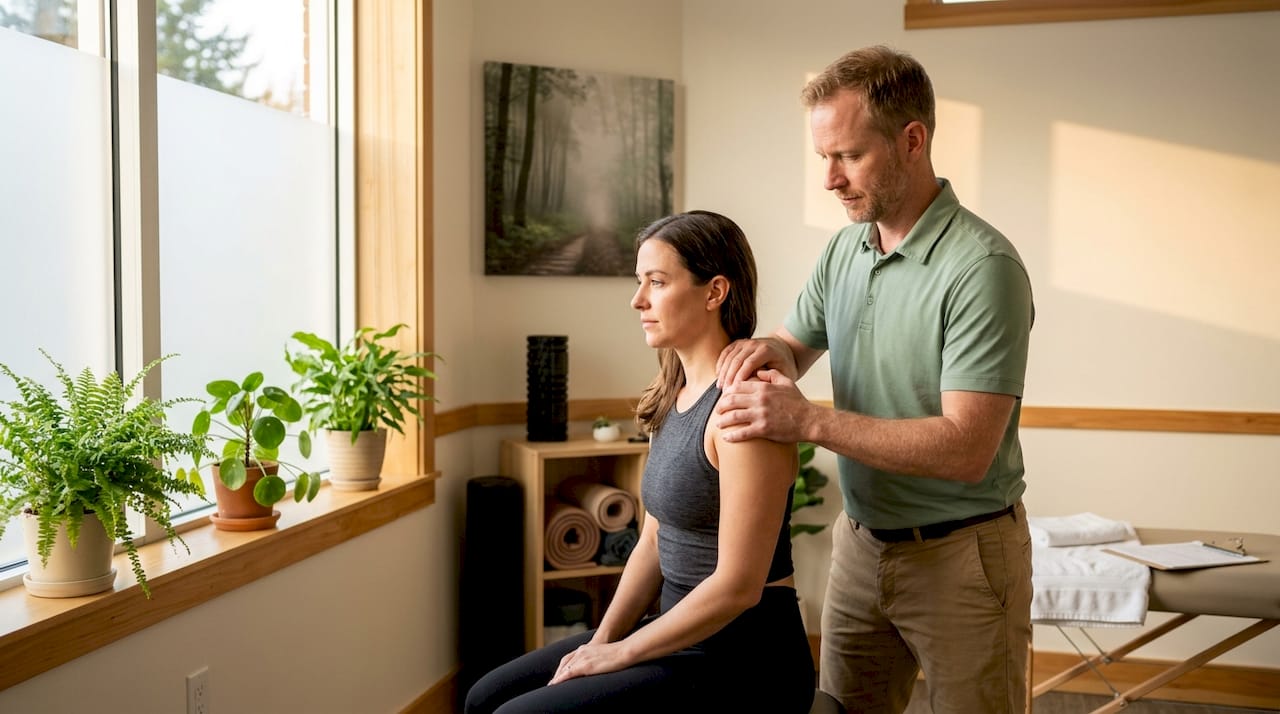
If you have been managing pain with medication and not getting lasting results, you are not alone. Millions of people cycle through prescriptions, injections, and even surgery without ever fully addressing what is causing their pain in the first place. The benefits of manual therapy offer something different. This hands-on approach, performed by trained physical therapists, works directly on the tissues, joints, and nervous system to address the root mechanical and neurological sources of pain. It is evidence-based, drug-free, and far more personalized than most people realize.
Table of Contents
Key takeaways
Point | Details |
Targets root causes | Manual therapy addresses mechanical and neurological pain sources, not just surface symptoms. |
Clinically supported | Spinal manipulation is recommended as a first-line treatment for acute and chronic low back pain in major clinical guidelines. |
Safer than most alternatives | Serious complications are extremely rare, occurring in roughly 1 in 5.85 million manipulations. |
Best combined with exercise | Manual therapy paired with therapeutic exercise and education produces better outcomes than either approach alone. |
Highly personalized | Effective treatment depends on a thorough initial evaluation and a care plan tailored to your specific condition. |
How manual therapy works on your body
Manual therapy is a specialized category of hands-on techniques performed by licensed physical therapists and other trained practitioners. It includes joint mobilization, manipulation, soft tissue release, myofascial techniques, and instrument-assisted methods. What separates it from a general massage or stretching routine is the clinical precision behind every move.
On a mechanical level, joint mobilization and soft tissue work improve circulation, reduce inflammation, and break down scar tissue that forms after injury or surgery. When a joint is stiff or restricted, surrounding tissues adapt in ways that compound the problem over time. Manual therapy restores normal movement patterns before that compensation becomes a bigger issue.
The neurological side is equally important and often underappreciated. Manual therapy activates brain regions involved in pain modulation, specifically the periaqueductal gray and nucleus raphe magnus, which are responsible for the body’s own descending pain control system. In practical terms, this means a skilled therapist treating your lower back can produce pain-relieving effects that extend well beyond the area being worked on.
Here is what is happening during a well-executed session:
Joint mobilization restores normal gliding and rolling mechanics in stiff joints, reducing compression and irritation
Soft tissue release lengthens shortened muscles and fascia, releasing trigger points that refer pain to other areas
Neurological gating interrupts pain signals traveling to the brain by stimulating competing sensory input
Endorphin release is triggered by manual pressure and movement, providing a natural reduction in pain perception
Improved circulation to restricted areas accelerates the delivery of nutrients and removal of inflammatory byproducts
Pro Tip: Ask your therapist to explain what technique they are using and why. Understanding the purpose behind each technique helps you stay engaged and reinforces the neurological benefit of the treatment.
Key benefits of manual therapy backed by evidence
The advantages of manual therapy are not theoretical. Clinical research and international guidelines have confirmed its effectiveness across a wide range of conditions.

Pain reduction is the most immediate and recognizable benefit. Patients often notice immediate improvements in stiffness, pain, and mobility after their first few sessions. For people dealing with chronic low back pain, neck pain, or tension headaches, that early relief is often what motivates them to stay committed to a full rehabilitation program.
Beyond pain, manual therapy delivers measurable improvements in joint mobility and range of motion. If you have ever struggled to turn your head fully after a whiplash injury, or bend forward comfortably after lumbar surgery, you understand how limiting restricted movement can be. Restoring that mobility is not just about comfort. It allows you to perform the therapeutic exercises that drive long-term recovery.
“Manual therapy addresses root mechanical and neurological causes of pain, reducing dependence on medications and limiting side effects.” — Manual Therapy vs Other Therapeutic Methods
Spinal manipulation is recommended in clinical guidelines as a first-line, non-pharmacologic treatment for both acute and chronic low back pain, with effectiveness comparable to NSAIDs and superior to placebo. That is a significant finding given how commonly anti-inflammatory medications are prescribed for musculoskeletal pain.
The psychological benefits deserve equal attention. Tactile interaction in manual therapy reduces patient anxiety and builds the kind of therapeutic trust that improves engagement throughout the recovery process. When you feel heard and physically helped, you show up differently to your appointments and to your home exercise program.
Conditions that respond particularly well to manual therapy include:
Acute and chronic low back pain, including disc-related and postural issues
Neck pain and cervicogenic headaches, especially after prolonged computer use or motor vehicle accidents
Shoulder impingement and rotator cuff dysfunction, where joint mechanics are compromised
Post-surgical recovery, where scar tissue and guarded movement patterns slow rehabilitation
Sports injuries involving ligament sprains, muscle strains, and joint restrictions
Temporomandibular joint (TMJ) dysfunction, which often responds to targeted intraoral and cervical techniques
If you want a broader look at how these techniques fit into a full physical therapy approach to recovery, the relationship between manual care and active rehabilitation is worth understanding in depth.
Manual therapy vs other pain management options
Pain medications work by suppressing your nervous system’s response to pain signals. They do not move a stiff joint, release a locked muscle, or correct the biomechanical pattern causing your hip to ache every time you walk up stairs. For short-term acute pain, they serve a purpose. Used long-term, they carry real risks, including dependency, gastrointestinal effects, and a growing tolerance that requires higher doses for the same relief.
Surgery is the right answer in some cases. But for the majority of musculoskeletal pain conditions, it is a last resort that many patients pursue prematurely because they have not had access to effective conservative care.
Manual therapy is a cornerstone of modern physical therapy, and it is most effective when combined with exercise and patient education rather than used in isolation. This is where the comparison table below helps clarify how these approaches differ:
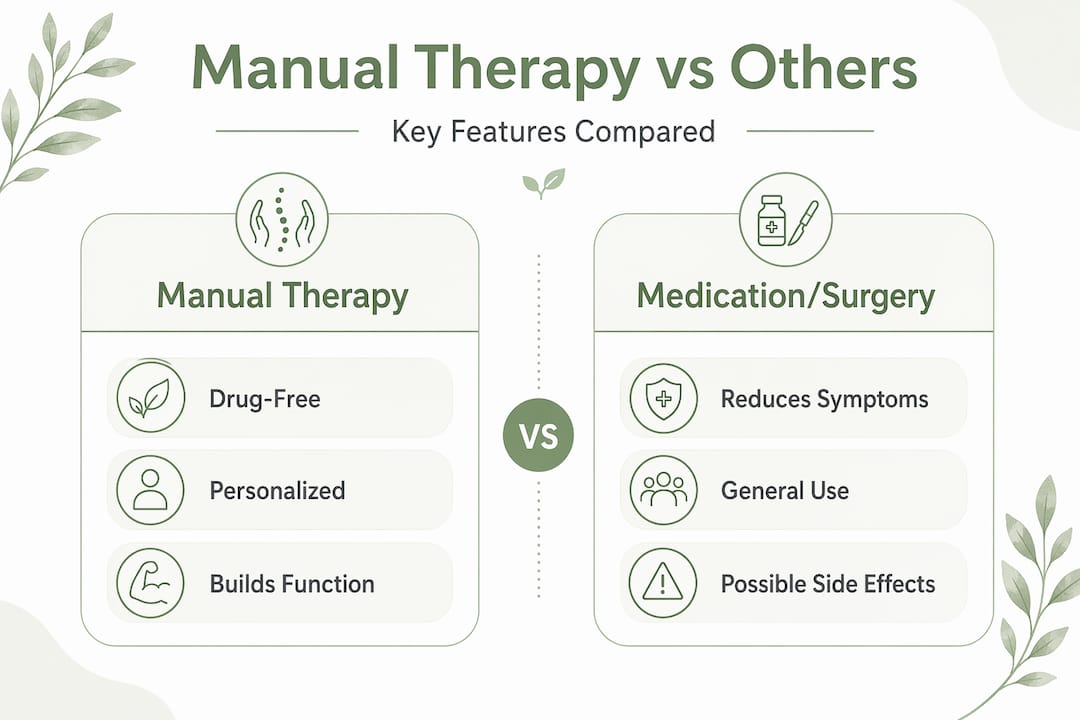
Approach | Targets root cause | Drug-free | Builds long-term function | Personalized to individual |
Pain medication | No | No | No | Partially |
Surgery | Sometimes | No | Sometimes | Yes |
General exercise only | Partially | Yes | Yes | Partially |
Manual therapy alone | Yes | Yes | Partially | Yes |
Manual therapy + exercise | Yes | Yes | Yes | Yes |
The combination column is the one worth paying attention to. Manual therapy paired with exercise and education yields outcomes that consistently outperform either approach alone. Think of manual therapy as the key that unlocks a restricted joint so the exercise program can actually do its job.
Manual therapy must be highly specific and tailored to the individual patient’s biomechanical and neurological profile. A technique that provides relief for one person’s lumbar pain may not be appropriate for another with a similar complaint but different movement findings. That specificity is what separates a skilled physical therapist from a generic treatment protocol.
Pro Tip: Do not evaluate manual therapy based on a single session. Clinical improvements build over multiple visits, especially when paired with a structured home exercise program your therapist designs for you.
What to expect and how to get started
Knowing that manual therapy works is one thing. Knowing how to access it effectively is another. Here is how to approach it practically.
Choose a licensed physical therapist with specialized training. Look for credentials or continuing education in manual therapy, orthopedic physical therapy, or certification through recognized physical therapy boards. The quality of the evaluation determines the quality of the treatment.
Expect a thorough initial examination. Your first visit should include a full movement assessment, pain history, and functional testing. A thorough initial examination and clinical reasoning help therapists identify specific movement restrictions and pain drivers, making your treatment highly individualized from the start.
Plan for 6 to 12 sessions in most cases. Acute injuries may resolve in fewer visits. Chronic conditions typically require more time to achieve lasting change. Your therapist should reassess your progress regularly and adjust the plan accordingly.
Commit to your home program. Manual therapy sessions are typically 30 to 60 minutes. The work you do between visits, including stretching, strengthening, and movement practice, determines how well you maintain the gains made during treatment.
Understand the safety profile. Serious complications from manual therapy are extremely rare, with cervical artery dissection occurring in approximately 1 in 5.85 million manipulations. Mild post-treatment soreness occurs in roughly 2% of cases, similar to how your muscles feel after a new workout.
Pro Tip: Bring a list of your current medications, prior imaging, and any previous therapy notes to your first appointment. It saves time and helps your therapist design a more targeted treatment from session one.
For a practical overview of the specific therapy techniques for pain relief that your physical therapist may use, including soft tissue mobilization and joint-specific methods, it helps to understand the full toolkit available to you.
My take on what makes manual therapy different
I have worked in physical therapy long enough to see how patients respond when they finally receive care that actually engages with their problem. What strikes me most is not just the physical relief people feel. It is the shift in how they relate to their own body and their own recovery.
Most people who come in after months of taking pain medications or waiting out chronic discomfort have lost confidence in their body’s ability to get better. They are passive. They are frustrated. Manual therapy changes that dynamic quickly, and not just because of the pain relief. It is the experience of a skilled therapist identifying exactly where the restriction is, addressing it precisely, and then watching the patient move with noticeably less effort afterward. That is a powerful moment for someone who has been suffering.
What I have learned is that manual therapy functions best as an empowering approach that improves patient mindset and engagement rather than a passive treatment someone receives lying on a table. Patients who understand what is being done and why become active participants in their care. They do their exercises. They modify behaviors that contributed to the problem. They recover faster and more completely.
My honest advice: do not wait until you are desperate. The patients who get the most out of manual therapy are the ones who come in early, stay consistent, and treat the sessions as the beginning of a process rather than a one-time fix.
— Tj
Start your recovery at Contemporaryrehabservices
At Contemporaryrehabservices, a boutique physical therapy clinic serving Albertson, Nassau County, and Queens, our therapists integrate manual therapy with personalized exercise programs and patient education to give you outcomes that last. We do not apply cookie-cutter protocols. Every treatment plan begins with a thorough evaluation and is built around your specific condition, your goals, and your timeline.
Whether you are dealing with chronic back pain, recovering from surgery, or managing a sports injury, our team brings advanced manual therapy training and a collaborative approach to every session. We accept Medicare, Aetna, Cigna, Emblem, and United Healthcare plans to make expert care accessible. You can get started at our Albertson location or explore all of our available therapy services to find the right fit for your needs.
FAQ
What are the main benefits of manual therapy?
Manual therapy reduces pain, restores joint mobility, decreases muscle tension, and improves circulation. When combined with therapeutic exercise, it also supports lasting functional recovery rather than temporary symptom relief.
Is manual therapy safe?
Yes. Serious complications are extremely rare, occurring in approximately 1 in 5.85 million spinal manipulations. Minor soreness after a session is the most common side effect, affecting roughly 2% of patients.
How does manual therapy differ from a regular massage?
Manual therapy is performed by a licensed physical therapist using clinically specific techniques targeted at joint mechanics and neurological pain pathways. A general massage addresses muscle relaxation but does not correct movement restrictions or retrain pain modulation.
How many sessions does manual therapy take to work?
Most patients with acute conditions notice meaningful improvement within 4 to 6 sessions. Chronic conditions typically require 8 to 12 sessions, especially when combined with a structured home exercise program.
Can manual therapy replace pain medication?
For many musculoskeletal conditions, manual therapy is as effective as NSAIDs for pain relief, and it addresses the underlying causes rather than masking symptoms. It is not a replacement for medication in all situations, but it often significantly reduces the need for it.
Recommended
Comments