
Physical Therapy for Balance Disorders: What to Know
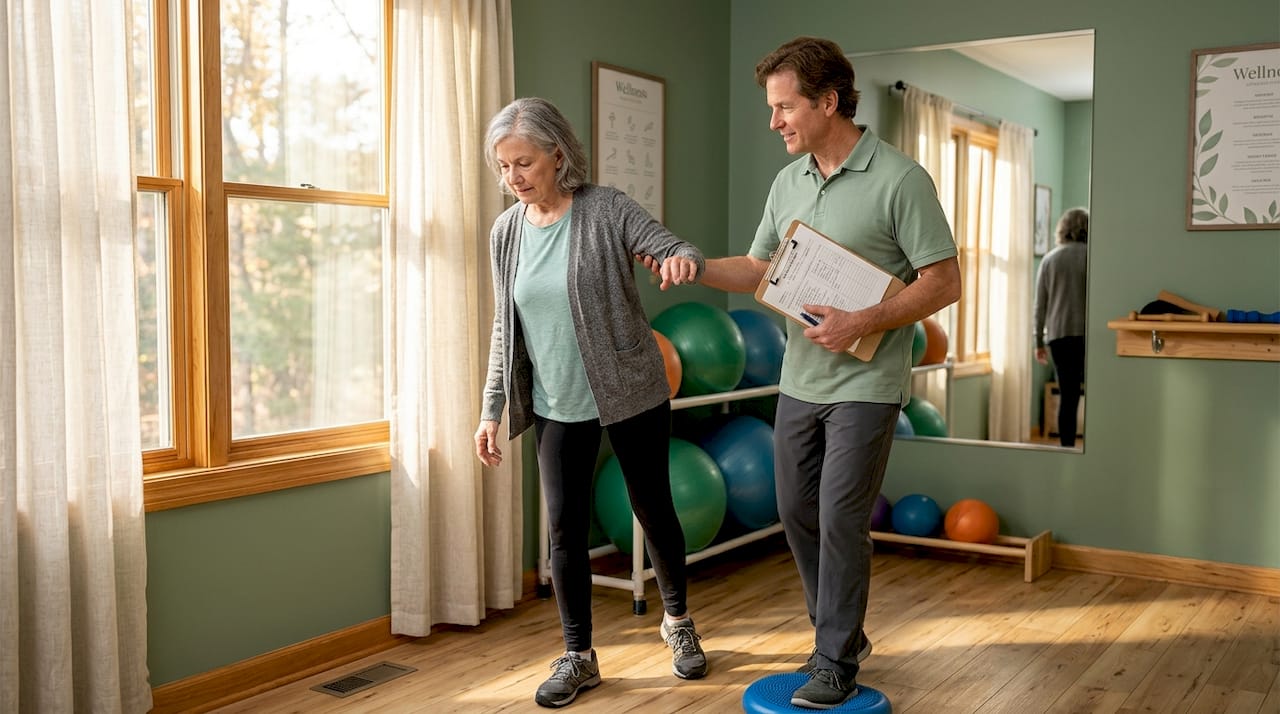
Physical therapy for balance disorders is defined as a clinically validated treatment program, most commonly delivered through vestibular rehabilitation therapy (VRT), that reduces dizziness, improves stability, and restores functional mobility. If you have been experiencing vertigo, unsteadiness, or a persistent sense that the room is spinning, you are not alone. Millions of Americans deal with balance disorders every year, and many do not realize that a structured PT program can address the root cause rather than just masking symptoms. The vestibular rehabilitation approach targets the vestibular system, the inner ear and brain network that controls your sense of balance, and teaches your body to compensate when that system is not working correctly.
What is PT for balance disorders and how does VRT work?
Vestibular rehabilitation therapy is a specialized physical therapy approach that uses balance training and targeted exercises to reduce dizziness and improve stability when the vestibular system is not compensating properly. The American Academy of Otolaryngology Head and Neck Surgery (AAO-HNS) describes VRT as a scientifically based and clinically valid treatment for persistent dizziness and postural instability following peripheral vestibular or central nervous system injury. That clinical backing matters. It means you are not pursuing an experimental option. You are following a well-established path with a strong track record.
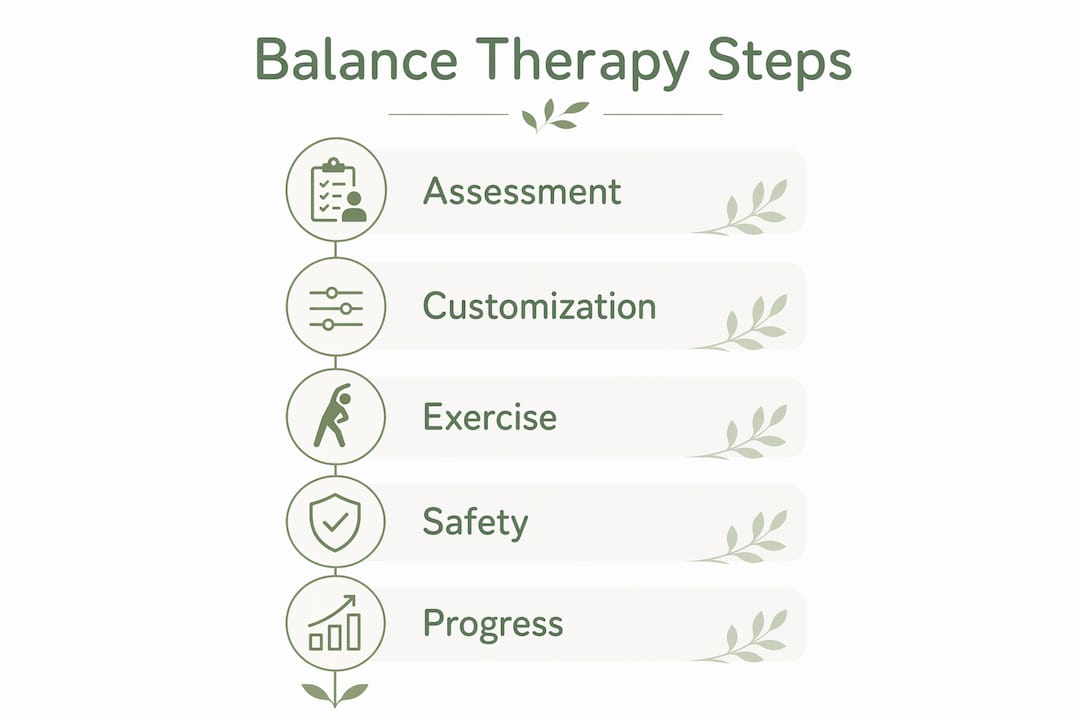
The therapy process follows a logical, step-by-step structure:
Comprehensive initial assessment. Your physical therapist evaluates your balance, walking pattern, strength, and flexibility. Specific tests identify what triggers your symptoms and which part of the vestibular system is involved.
Personalized exercise design. Based on your assessment, the therapist builds a program using balance retraining, gaze stabilization exercises, and habituation exercises. Gaze stabilization trains your eyes and head to work together smoothly. Habituation exercises expose you to movements that provoke mild symptoms, gradually reducing your sensitivity over time.
Progressive challenge increases. Exercises become more demanding as your brain adapts. This progressive loading is what stimulates central compensation, the process by which your brain learns to rely on alternative signals when the vestibular system is impaired.
Home exercise program. Clinic sessions alone are not enough. Your therapist will assign specific exercises to practice at home, which is where much of the real progress happens between appointments.
Pro Tip: Keep a simple symptom diary during your first two weeks of VRT. Note which exercises provoke dizziness and how quickly it fades. This data helps your therapist adjust the program faster and more precisely than memory alone.
Customized VRT programs consistently show better improvement patterns than standardized, one-size-fits-all protocols. Personalization is not a luxury in balance disorder rehabilitation. It is the mechanism that makes the therapy work.
What conditions does physical therapy for balance issues treat?
Physical therapy addresses a wide range of balance disorders, from inner ear problems to neurological conditions. Understanding which diagnosis you have helps your therapist select the right tools from the start.
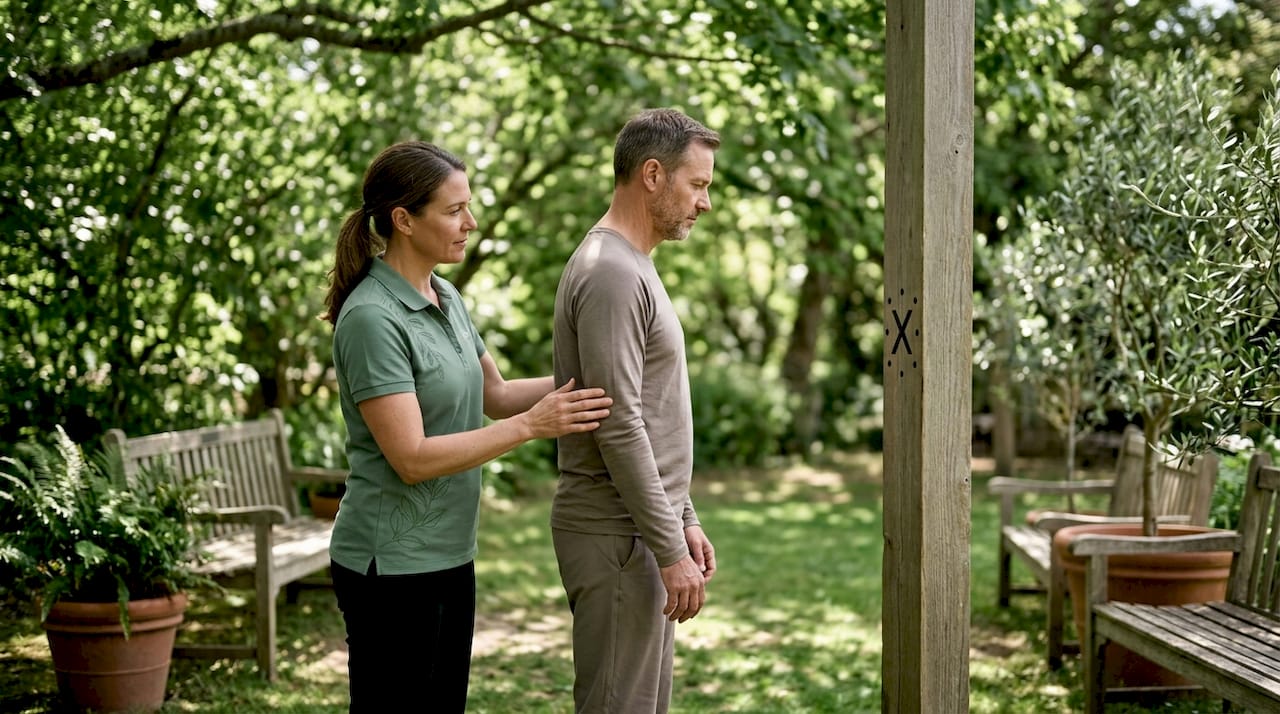
Benign paroxysmal positional vertigo (BPPV) is the most common cause of vertigo, and PT is the first-line treatment. BPPV occurs when tiny calcium crystals called otoconia become dislodged inside the semicircular canals of the inner ear. Canalith repositioning maneuvers, including the Epley maneuver for posterior-canal BPPV and the Gufoni maneuver for lateral-canal BPPV, physically guide those crystals back to where they belong. The effectiveness of these maneuvers depends heavily on accurate canal localization, which is why your therapist will first perform a Dix-Hallpike or roll test to confirm exactly which canal is affected before beginning treatment.
Parkinson’s disease causes significant balance impairment due to changes in postural control and motor coordination. A 2026 dose-response meta-analysis of 30 studies involving 2,932 participants found that balance-specific training produced the greatest effect on postural control in people with Parkinson’s, with a standardized mean difference of approximately 0.64. That figure represents a meaningful, real-world improvement in stability and fall risk. Physical therapy tailored to Parkinson’s focuses on postural alignment, weight shifting, and reactive balance strategies.
Persistent postural-perceptual dizziness (PPPD) is a chronic dizziness syndrome that often follows an acute vestibular event. It requires a multimodal treatment approach that integrates physical therapy with behavioral strategies and, when appropriate, medical management.
Here is a quick comparison of how PT approaches differ across these three conditions:
Condition | Primary PT approach | Role of medication |
BPPV | Canalith repositioning maneuvers (Epley, Gufoni) | Minimal. Medications do not replace maneuvers. |
Parkinson’s disease | Balance-specific training, postural control exercises | Complementary to PT, not a substitute |
PPPD | Habituation exercises, graded exposure, postural retraining | May support PT but PT is the core treatment |
Key benefits of physical therapy across all three conditions include:
Reduced frequency and intensity of dizziness episodes
Improved postural stability and confidence during daily activities
Lower fall risk, particularly in older adults
Greater independence with walking, turning, and navigating uneven surfaces
How does PT address gait, safety, and real-world balance challenges?
A PT program for balance disorders goes well beyond exercises performed in a quiet clinic room. Real-world balance training addresses the unpredictable demands of daily life, including crowded grocery stores, uneven sidewalks, and stairwells without handrails.
Your therapist will evaluate several functional areas during your sessions:
Gait analysis. How you walk, how you turn, and how you recover when you lose your footing. Subtle gait deviations often signal which balance strategy your body is overusing or underusing.
Head movement tolerance. Many people with vestibular disorders instinctively stop moving their heads to avoid dizziness. PT reintroduces controlled head movements during walking to rebuild tolerance and reduce avoidance behavior.
Obstacle navigation. Stepping over objects, walking on foam surfaces, and moving through narrow spaces are all practiced in therapy to prepare you for real environments.
Turning and directional changes. Pivoting quickly is one of the highest-risk movements for people with balance disorders. Therapy specifically trains turning strategies to reduce fall risk.
Home safety is also part of the program. Your therapist may assess your footwear, recommend removing loose rugs, and suggest grab bar placement in bathrooms. These modifications reduce fall risk while your vestibular system is still in the compensation process.
Pro Tip: Ask your therapist to practice one specific real-world scenario during each session, such as walking through a simulated busy environment or stepping off a curb. Functional practice transfers faster to daily life than isolated exercises alone.
Learning about balance training fundamentals can also help you understand why your therapist selects specific exercises and how each one builds on the last.
What should you expect during your balance disorder rehabilitation?
Balance disorder rehabilitation is a gradual process, and knowing what to expect makes it far easier to stay consistent. Here is a realistic picture of how a typical program unfolds:
Week one to two: Assessment and baseline exercises. Your therapist establishes your starting point and introduces low-intensity exercises. Some movements may provoke mild dizziness. This is expected and does not mean the therapy is making things worse. It means your brain is receiving the challenge it needs to begin adapting.
Weeks three to six: Progressive loading. Exercises increase in complexity and duration. You may begin standing on foam surfaces, walking with head turns, or practicing tandem stance. Home exercises become more demanding as well.
Weeks six to eight: Functional integration. Therapy shifts toward real-world tasks. You practice the specific activities that have been most affected by your balance disorder, whether that is climbing stairs, cooking, or walking outdoors.
Ongoing: Maintenance and self-management. Many patients continue a modified home program after formal therapy ends. Safe home exercise practice is a skill your therapist will teach you so you can maintain your gains independently.
Consistency is the single most important factor in outcomes. Patients who complete their home programs between sessions improve faster and maintain those improvements longer. PT works as part of a broader approach that may include medical evaluation, imaging, and coordination with your neurologist or ENT physician. The path to recovery through PT is rarely linear, but steady progress is the norm when the program is individualized and followed consistently.
Key takeaways
Physical therapy for balance disorders works because vestibular rehabilitation therapy uses personalized, progressive exercises to retrain the brain and body to compensate for vestibular dysfunction, reducing dizziness and fall risk.
Point | Details |
VRT is the core treatment | Vestibular rehabilitation therapy is the primary PT approach for most balance disorders, validated by AAO-HNS. |
Diagnosis drives technique | BPPV uses repositioning maneuvers; Parkinson’s uses balance-specific training; PPPD requires multimodal care. |
Customization improves outcomes | Personalized VRT programs produce more consistent improvement than generic protocols over 8 weeks. |
Home exercise compliance matters | Progress between clinic sessions depends on consistent home practice assigned by your therapist. |
Real-world training reduces falls | Gait retraining, obstacle navigation, and home safety modifications are standard parts of a complete program. |
Why individualized care changes everything in balance therapy
I have worked with many patients who came in convinced that their dizziness was just something they had to live with. They had tried rest, they had tried medication, and nothing had changed. What they had not tried was a properly assessed, individualized vestibular rehabilitation program.
The research confirms what I see in practice. Exercise specificity and patient engagement matter more than simply increasing the dose of therapy. A patient doing the wrong exercises consistently will plateau. A patient doing the right exercises, even at moderate intensity, will progress. That distinction is what separates effective balance disorder rehabilitation from generic fitness programs.
What I find most rewarding is watching patients reclaim activities they had quietly given up. One patient stopped attending her grandchildren’s soccer games because she feared falling on uneven grass. After eight weeks of targeted VRT and gait training, she was back on the sidelines. That outcome did not come from a standardized protocol. It came from understanding exactly what her vestibular system was and was not doing, and building a program around that specific picture.
My honest advice: do not wait until a fall forces the issue. If you are experiencing dizziness, unsteadiness, or a fear of falling, seek a proper vestibular assessment now. Early and accurate diagnosis means therapy can be targeted from the first session rather than spending weeks ruling out the wrong causes.
— Tj
How Contemporaryrehabservices can help you regain your balance
If you are living with dizziness, vertigo, or unsteadiness in the Queens or Nassau County area, Contemporaryrehabservices offers specialized vestibular rehabilitation programs designed around your specific symptoms and goals.
The experienced therapists at Contemporaryrehabservices provide comprehensive evaluations covering gait, strength, and vestibular function, then build a personalized program that may include canalith repositioning maneuvers for BPPV, balance-specific training for neurological conditions, and practical fall prevention strategies. The clinic accepts Medicare, Aetna, Cigna, Emblem, and United Healthcare plans, making access straightforward. Whether you are near Albertson or prefer the Searingtown location, a consultation is the first step toward feeling steady and confident again. Contact Contemporaryrehabservices today to schedule your vestibular assessment.
FAQ
What is PT for balance disorders in simple terms?
PT for balance disorders is a structured physical therapy program, most often called vestibular rehabilitation therapy (VRT), that uses targeted exercises to reduce dizziness and improve stability. It works by training your brain to compensate for problems in the vestibular system.
How long does physical therapy for balance issues take?
Most patients see meaningful improvement within six to eight weeks of consistent therapy, though the exact timeline depends on the underlying condition and how regularly home exercises are completed.
Is physical therapy effective for BPPV vertigo?
Yes. Canalith repositioning maneuvers such as the Epley maneuver are the first-line treatment for BPPV and are far more effective than medication alone for resolving positional vertigo episodes.
Can physical therapy help prevent falls in older adults?
Physical therapy directly addresses fall risk by retraining gait, improving postural control, and recommending home safety modifications. The AAO-HNS specifically identifies fall risk reduction in older adults as a primary goal of vestibular rehabilitation.
What insurance plans cover balance disorder physical therapy?
Coverage varies by plan, but Contemporaryrehabservices accepts Medicare, Aetna, Cigna, Emblem, and United Healthcare, which covers a large portion of patients in the Nassau County and Queens areas seeking balance disorder treatment.
Recommended
In my opinion, the section on vestibular rehabilitation is one of the most important points because balance disorders cannot always be explained solely by muscle strength. Exercises involving eye and head movements, as well as postural control, demonstrate how the vestibular system needs to be trained in specific ways. Approaches such as vestibular rehabilitation therapy are also interesting because they are associated with improvements in balance disorders and a reduced risk of falls.