
10 Reasons to See a Physical Therapist This Year

Physical therapy is a licensed, evidence-based healthcare practice focused on restoring movement, reducing pain, and improving function. The reasons to see a physical therapist extend far beyond recovering from a broken bone or a sports injury. Research shows that starting PT within 3 days of back pain onset reduces healthcare costs by 44% and surgery risk by 53%. That single statistic reframes physical therapy from a last resort into a first response. At Contemporaryrehabservices in Albertson, NY, patients across Queens and Nassau County experience these benefits firsthand through personalized, evidence-based care.
1. Reasons to see a physical therapist: you have pain that won’t quit
Pain lasting more than 2–3 weeks without improvement is a clear signal your body needs professional attention. Resting and waiting rarely resolves the underlying mechanical problem. A licensed physical therapist identifies the root cause and builds a plan to address it directly.
Common pain-related reasons to seek PT include:
Persistent back, neck, or shoulder pain that limits daily tasks
Joint pain in the knee, hip, or ankle that worsens with activity
Recurring headaches linked to neck tension or posture
Pain after a car accident, fall, or workplace injury
Nerve pain or tingling that radiates into the arms or legs
Pro Tip: If your pain returns every few months in the same spot, that pattern signals a mechanical problem, not bad luck. A physical therapist can break the cycle.
2. Your movement or flexibility has declined

Stiffness that limits how far you can reach, bend, or turn is not a normal part of aging. Reduced range of motion often signals muscle tightness, joint restriction, or poor movement patterns that respond well to physical therapy. Left untreated, these restrictions force other body parts to compensate, which creates new pain over time.
A physical therapist uses hands-on manual therapy and targeted stretching to restore normal movement. Techniques like joint mobilization and myofascial release address the tissue-level restrictions that cause stiffness. Patients often notice meaningful improvement within the first few sessions.
3. Physical therapy helps prevent surgery and reduce opioid use
Physical therapy is a science-backed alternative to surgery and medication because it treats the mechanical root cause rather than masking symptoms. This distinction matters enormously for long-term outcomes.
“Starting physical therapy early reduces surgery risk by 53% and cuts total healthcare costs by 44%.” — mymedicineadvisor.com
That cost and risk reduction comes from resolving the problem before it escalates. Opioid medications manage pain signals but do nothing to correct the movement dysfunction causing them. Physical therapy, by contrast, rebuilds strength, corrects alignment, and restores function so the pain source is eliminated, not suppressed.
4. You are recovering from surgery or a serious injury
Post-surgical rehabilitation is one of the most well-established indications for physical therapy. After procedures like knee replacement, rotator cuff repair, or spinal surgery, structured PT restores strength and mobility that the body cannot recover on its own. Skipping or delaying rehab after surgery leads to scar tissue buildup, muscle atrophy, and prolonged disability.
The rehabilitation process at a qualified clinic follows a phased approach: early mobility work, progressive strengthening, and functional training. Each phase builds on the last. Patients who complete all three phases return to normal activity faster and with fewer complications.
5. Physical therapy improves functional mobility and quality of life
Patients report 40–50% pain reduction within 4–6 weeks of a consistent physical therapy program for back pain. That level of improvement translates directly into better daily function, not just lower pain scores on a chart.
Functional Goal | How PT Addresses It |
Walking without pain | Gait retraining and hip strengthening |
Climbing stairs safely | Quadriceps and glute activation exercises |
Sleeping through the night | Postural correction and tension release |
Returning to work or sport | Sport-specific or task-specific conditioning |
Pro Tip: Track your functional goals, not just your pain level. Being able to walk two blocks or carry groceries without discomfort is a more meaningful measure of progress than a number on a scale.
6. You have balance problems or fear of falling
Balance problems are a serious health concern, especially for adults over 65. Physical therapy is vital for preventing falls by addressing muscle mass, bone density, and coordination before an injury occurs. A fall that leads to a hip fracture can permanently alter a person’s independence.
PT programs for balance include vestibular rehabilitation, proprioception training, and lower-body strengthening. These are not generic exercises. They are calibrated to each patient’s specific deficits. Older adults in Nassau County who work with Contemporaryrehabservices on balance training gain measurable confidence in their daily movement. Resources like preventing elderly fall injuries reinforce why early intervention matters so much for this population.
7. Surprising reasons: PT treats more than musculoskeletal pain
Most people associate physical therapy with back pain or knee injuries. The actual scope is much broader. PT is regularly used for performance optimization, ergonomic adjustments, and prehabilitation, not only pain treatment.
Lesser-known conditions that respond well to physical therapy include:
Pelvic floor dysfunction: Incontinence, pelvic pain, and postpartum recovery all benefit from specialized PT.
Vertigo and dizziness: Vestibular PT uses repositioning techniques like the Epley maneuver to resolve benign paroxysmal positional vertigo (BPPV).
Jaw pain and TMJ dysfunction: Manual therapy and targeted exercises reduce tension in the temporomandibular joint.
Cervicogenic headaches: These headaches originate from the neck and respond directly to cervical spine treatment.
Prehabilitation: PT before a planned surgery strengthens the body in advance, which improves post-surgical outcomes and shortens recovery time.
Athletes also use PT proactively. Physical therapy for athletes addresses movement inefficiencies before they become injuries, which extends careers and improves performance.
8. Your pain is in one place but the cause is somewhere else
Pain location and pain source are often two different things. Knee pain can originate from hip weakness or poor foot mechanics, not from the knee itself. Treating only the symptomatic area produces temporary relief at best.
Physical therapists are trained to conduct whole-body assessments that trace pain back to its true origin. This is why a thorough evaluation covers posture, gait, strength, and joint mobility across multiple regions, not just the area that hurts. Patients who have tried other treatments without lasting results often find that this broader assessment finally explains what has been going wrong.
9. What to expect during your first physical therapy sessions
A physical therapy evaluation covers posture, range of motion, strength, and movement quality. The therapist uses this information to build an individualized treatment plan. No two plans look the same because no two patients present the same problem.
A typical course of treatment includes:
Manual therapy: Hands-on techniques to reduce joint restriction and muscle tension.
Therapeutic exercise: Targeted movements that rebuild strength and correct faulty patterns.
Neuromuscular re-education: Training the nervous system to control movement more efficiently.
Patient education: Teaching you to understand your condition and manage it independently.
Home exercise program: A set of exercises to complete between sessions.
Home exercise adherence increases success rates by up to 70%. That number reflects a simple truth: what you do between sessions matters as much as what happens during them.
10. Early treatment prevents chronic movement problems
Delaying physical therapy often results in chronic movement dysfunctions that are much harder to correct later. The body adapts to pain by changing how it moves. Those adaptations protect you in the short term but create new problems over months and years.
Starting PT within 1–2 weeks of symptom onset interrupts this cycle before it becomes permanent. Patients who act early spend less time in treatment, recover more completely, and are less likely to experience the same problem again. For patients managing chronic neck and back pain, early and consistent intervention is the single most effective strategy available.
Key takeaways
Physical therapy delivers the greatest benefit when started early, applied consistently, and matched to the root cause of the problem rather than the symptom alone.
Point | Details |
Start early | Beginning PT within days of pain onset cuts surgery risk by 53% and costs by 44%. |
Pain is often referred | Treat the source, not just the site; whole-body assessment finds the real cause. |
PT goes beyond pain | Vertigo, pelvic floor issues, and athletic performance all respond to physical therapy. |
Patient effort matters | Completing home exercise programs improves outcomes by up to 70%. |
Prevention is valid | You do not need severe pain to benefit; PT prevents injuries and maintains independence. |
Why I think most people wait too long to see a physical therapist
People tend to treat physical therapy as a last resort, something you do after surgery or after months of failed self-treatment. That instinct costs them time, money, and function they may never fully recover.
What I have observed working in rehabilitation is that the patients who arrive early, before a problem becomes chronic, almost always do better. They need fewer sessions. They return to full activity faster. They are less likely to come back with the same injury a year later.
The other thing most people miss is that PT is not passive. You are not lying on a table while someone fixes you. You are an active participant in your own recovery. That shift in mindset, from patient to partner, is where the real transformation happens. Physical therapy gives you tools and understanding that stay with you long after the sessions end.
If you are in Nassau County or Queens and you are waiting to see if the pain goes away on its own, I would encourage you to reconsider. The evidence is clear. Early action produces better outcomes. Waiting rarely does.
— Tj
Physical therapy at Contemporaryrehabservices: personalized care in Nassau County
Contemporaryrehabservices is a boutique physical therapy clinic in Albertson, NY, serving patients across Queens and Nassau County. The clinic accepts Medicare, Aetna, Cigna, Emblem, and United Healthcare plans, making care accessible for a wide range of patients.
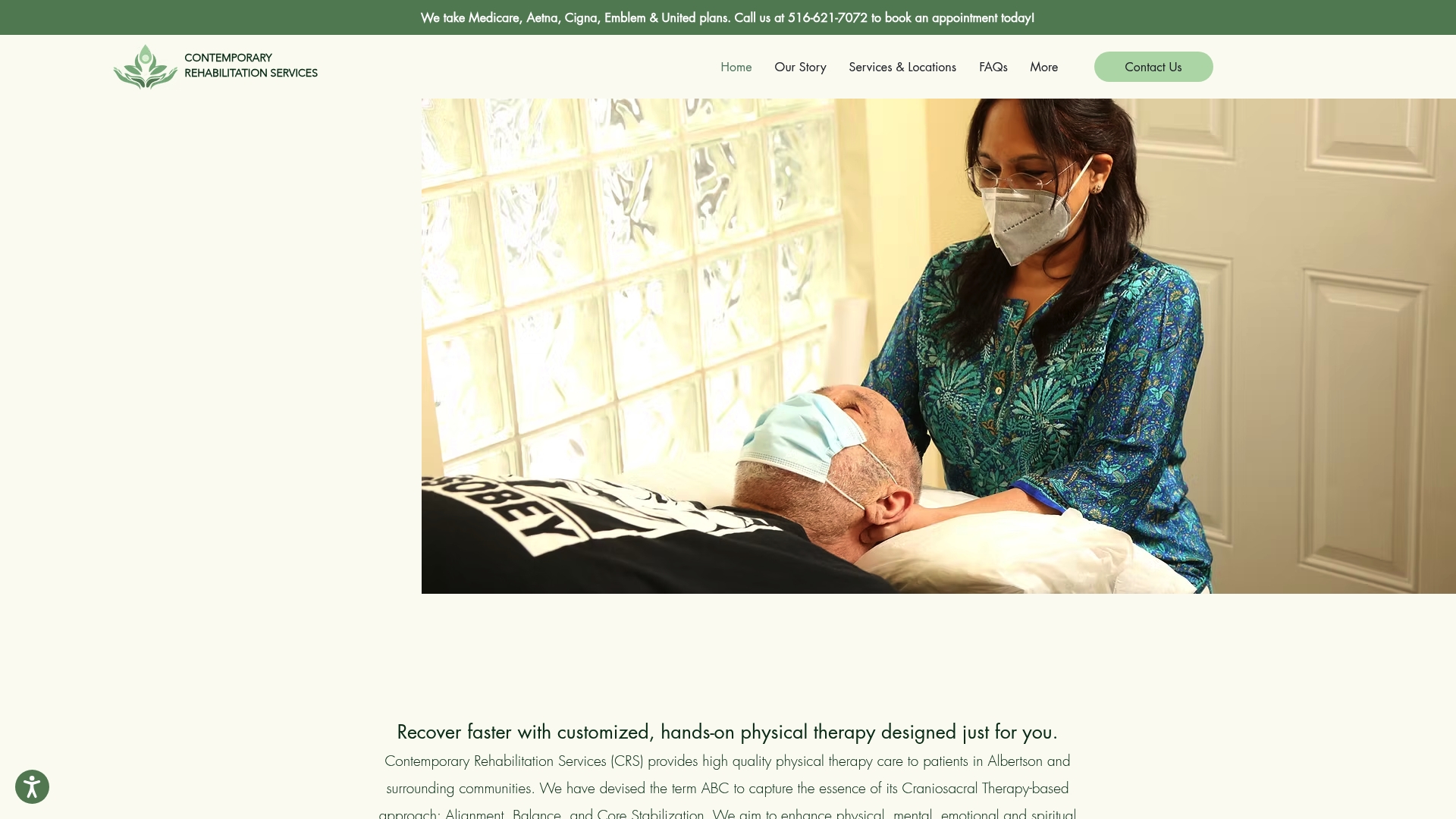
Whether you are managing chronic pain, recovering from surgery, or looking to move better and feel stronger, Contemporaryrehabservices builds individualized treatment plans grounded in current clinical evidence. The team addresses the full picture of your condition, not just the area that hurts. Visit the full therapy services page to learn what options are available and take the first step toward feeling like yourself again.
FAQ
How do I know when to visit a physical therapist?
See a physical therapist if pain persists beyond 2–3 weeks, limits daily activities, or keeps returning in the same area. Early intervention produces significantly better outcomes than waiting.
Does physical therapy actually reduce the need for surgery?
Starting physical therapy early reduces surgery risk by 53% for conditions like back pain. PT resolves the mechanical cause of the problem, which often eliminates the need for surgical intervention entirely.
Can physical therapy help with conditions other than pain?
Physical therapy treats vertigo, pelvic floor dysfunction, cervicogenic headaches, and jaw pain, in addition to musculoskeletal conditions. It is also used for athletic performance and prehabilitation before planned surgery.
How long does it take to see results from physical therapy?
Patients typically report 40–50% pain reduction within 4–6 weeks of a consistent program. Results depend on the condition, its severity, and how consistently the patient follows the home exercise program.
Does Contemporaryrehabservices accept insurance for physical therapy?
Contemporaryrehabservices accepts Medicare, Aetna, Cigna, Emblem, and United Healthcare plans. Contact the clinic directly to confirm coverage for your specific plan and condition.
Recommended
Comments