
Step-by-Step Physical Therapy for Kids: A Parent's Guide

Step-by-step physical therapy for kids is a structured process that moves from initial evaluation through personalized treatment planning, targeted therapy sessions, and caregiver-guided home exercises. Pediatric physical therapy, the recognized clinical term, addresses motor delays, injuries, and developmental challenges in children from infancy through adolescence. Early intervention is the single most important factor in outcomes. Delaying treatment can lead to lifelong complications, while timely therapy maximizes strength, flexibility, and function before bones and movement patterns become fixed. This guide walks you through every stage so you know exactly what to expect and how to help.
What happens during the initial pediatric physical therapy evaluation?
The first appointment is an assessment, not a treatment session. A licensed pediatric physical therapist gathers your child’s developmental history, listens to your concerns, and observes how your child moves. This guided play observation gives the therapist a complete picture of natural movement patterns, motor planning, and coordination that clinical tests alone cannot capture.
Your input as a caregiver matters more than most parents realize. You know your child’s daily habits, fears, and strengths. Sharing that context helps the therapist design an evaluation that feels comfortable rather than clinical.
The therapist will assess several key areas during this first visit:
Motor skills: Can your child reach, grasp, crawl, walk, or run at the expected level for their age?
Strength: Are specific muscle groups weaker than typical for their developmental stage?
Range of motion: Do joints move through their full, expected arc without pain or restriction?
Balance and coordination: Can your child maintain stability during standing, walking, or play activities?
Functional movement: How does your child perform everyday tasks like climbing stairs or getting up from the floor?
The therapist documents all findings and uses them to build a treatment plan tailored specifically to your child.
Pro Tip: Complete all intake paperwork before the first appointment. Therapists who spend less time on forms spend more time evaluating your child.
How is a personalized treatment plan created for children?
A personalized treatment plan is built directly from the evaluation findings. The therapist sets goals tied to your child’s specific developmental milestones, not a generic checklist. A three-year-old recovering from a hip condition has completely different goals than a ten-year-old working through a sports injury.
Goal setting follows a clear sequence:
Identify the primary concern. The therapist defines the core movement problem, such as weak core muscles, limited ankle mobility, or poor balance.
Set short-term goals. These are achievable within four to six weeks, like tolerating a balance beam activity for 30 seconds without support.
Set long-term goals. These reflect the bigger outcome, such as running without pain or keeping up with peers on the playground.
Determine session frequency. Pediatric therapy typically runs one to two sessions per week, adjusted based on the severity of the condition and your family’s schedule.
Build the home program. The therapist designs exercises that fit naturally into your child’s daily routine so progress continues between clinic visits.
Play-based activities are the foundation of every good pediatric plan. Climbing, pretending to fly like a bird, and navigating obstacle courses are not just fun. They are therapeutic techniques that build strength, balance, and coordination in ways children actually enjoy.
Pro Tip: Ask the therapist to explain the “why” behind each goal. When you understand the purpose of an activity, you can reinforce it more confidently at home.
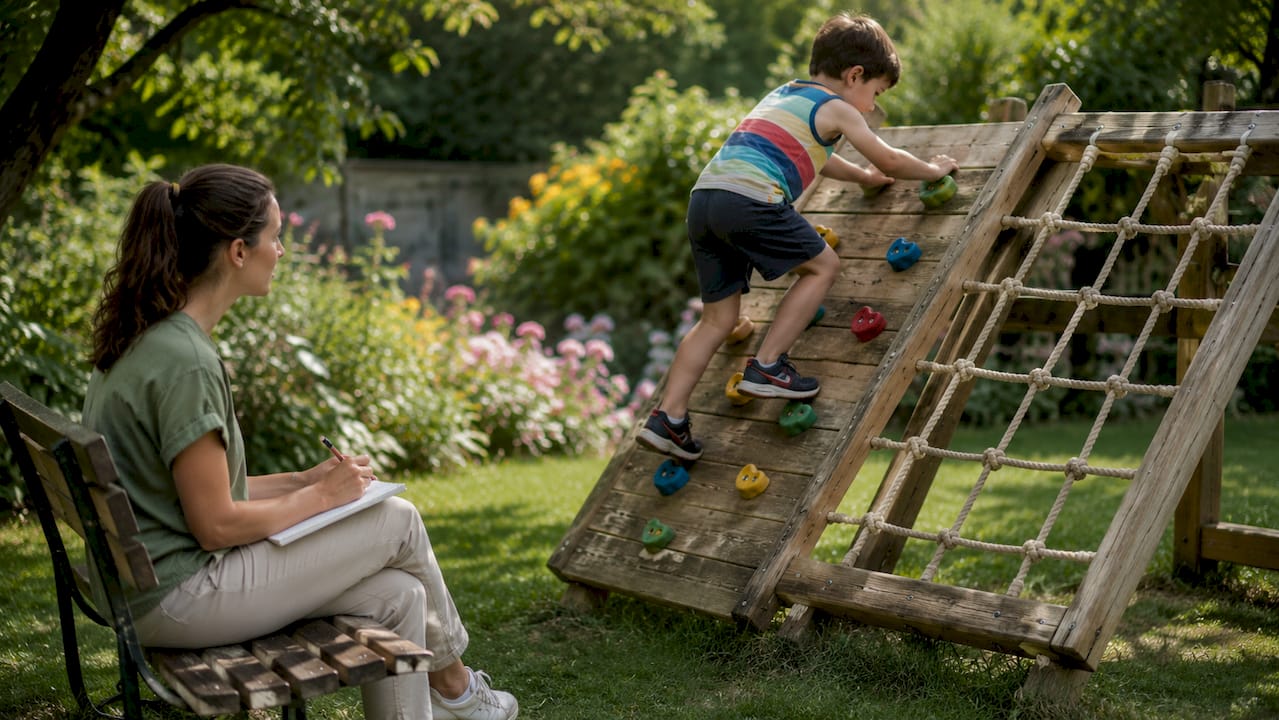
What do typical pediatric physical therapy sessions look like step by step?
A well-structured session follows a consistent rhythm that children quickly learn to trust. That predictability reduces anxiety and helps kids engage faster. Here is how a standard session unfolds:
Warm-up (5–10 minutes). Gentle movements like marching in place, arm circles, or light stretching prepare muscles and joints. The therapist uses this time to check in on how the child is feeling that day.
Skill-building activities (20–25 minutes). This is the core of the session. Activities are disguised as play. Balance beams build ankle stability. Tossing a ball back and forth trains hand-eye coordination and core control. Obstacle courses challenge motor planning and sequencing.
Hands-on techniques (10–15 minutes). The therapist may use manual stretching, joint mobilization, or soft tissue work to address specific restrictions. These techniques are gentle and always explained to the child beforehand.
Cool-down and review (5 minutes). The session ends with lighter movement and a brief conversation with the caregiver about what was worked on and what to practice at home.
Progress is tracked at every session. The therapist notes which activities the child completed, how long they held positions, and where they struggled. That data drives adjustments to the plan.
Session Component | Purpose | Typical Duration |
Warm-up | Prepare muscles, reduce anxiety | 5–10 minutes |
Play-based skill building | Strengthen, coordinate, balance | 20–25 minutes |
Manual techniques | Address specific restrictions | 10–15 minutes |
Cool-down and caregiver review | Reinforce home program | 5 minutes |
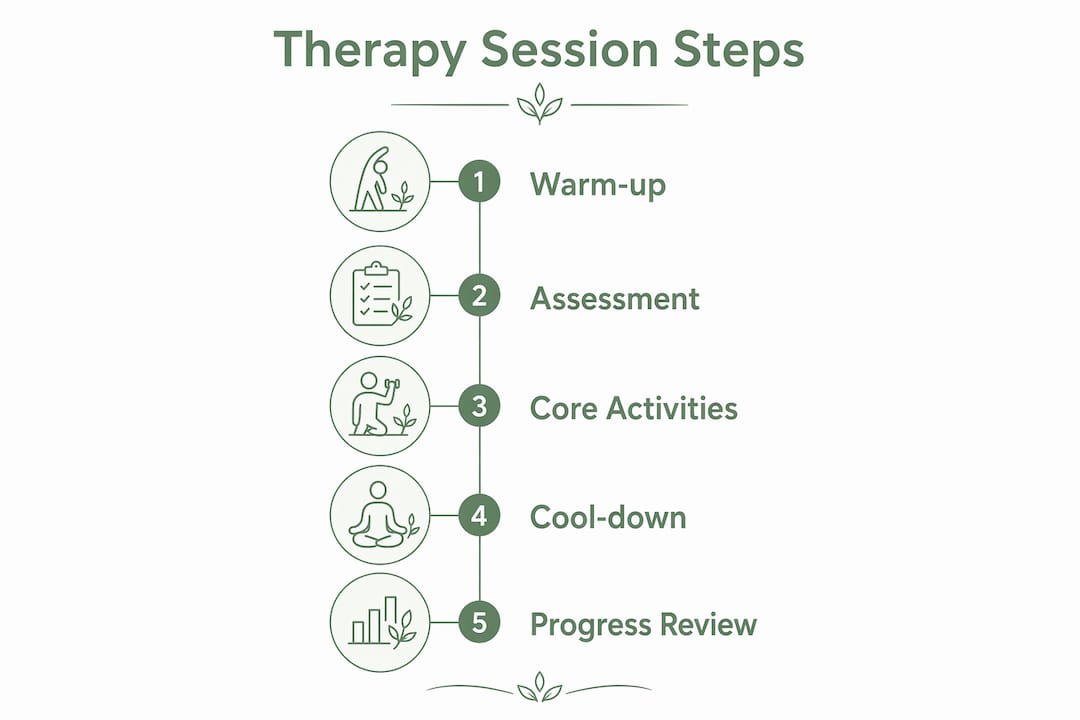
Understanding this structure helps you prepare your child. Tell them they are going to play games and do fun activities. That framing is accurate, and it sets a positive expectation.
How can parents support progress with home exercises?
Home exercises are not optional extras. They are a core part of the children’s physical therapy guide your therapist builds for your family. Progress between sessions depends heavily on what happens at home.
Follow these steps to make the home program work:
Get clear instructions before leaving the clinic. Ask the therapist to demonstrate each exercise and explain the correct form. Watch carefully and ask questions.
Start with the basics. Common home-based exercises include single-leg standing held for 10–15 seconds and hamstring stretches held for 20–30 seconds. Never start a new exercise without therapist confirmation.
Embed exercises into daily routines. Single-leg stands work perfectly while your child brushes their teeth. Stretches fit naturally into a bedtime routine. Routine reduces resistance.
Keep it playful. Turn a balance exercise into a “flamingo contest.” Make stretching a game. Children who enjoy their exercises do them consistently.
Track what you do. A simple notebook or phone note logging which exercises were done each day helps the therapist understand what is working and what needs adjustment.
Caregiver coaching on home exercises is one of the strongest predictors of therapy success. When parents understand the exercises and practice them consistently with their child, outcomes improve significantly compared to clinic sessions alone.
Pro Tip: Learn how to do home exercises safely before starting any program. Proper form protects your child and makes each exercise more effective.
Avoid two common mistakes. First, do not skip exercises because your child resists. Resistance is normal. Redirect with play rather than forcing compliance. Second, do not add exercises on your own. More is not always better in pediatric rehabilitation.
What are common challenges and how do you track progress?
Progress in pediatric physical therapy is rarely a straight line. Most families hit at least one rough patch, and knowing what to expect makes those moments easier to manage.
Common challenges include:
Child resistance. Some children refuse to participate, especially in the first few sessions. This usually fades once they realize therapy is play-based and the therapist is on their side.
Plateaus. Progress may stall after an initial burst of improvement. This is normal. It often signals that the plan needs to be updated with more challenging activities.
Inconsistent home practice. Busy schedules make it hard to keep up with the home program. Communicate this honestly with your therapist so the plan can be adjusted to fit your reality.
Difficulty seeing small gains. Parents often focus on the big goal and miss the small wins. A child who could not stand on one foot for two seconds and now holds it for eight seconds has made real progress.
Tracking progress works best when you focus on specific, observable behaviors rather than general impressions. Ask your therapist to share measurable benchmarks at each session. Write down what your child could and could not do at the start of therapy. Review those notes monthly.
Open communication with your therapist is the most effective tool for keeping the plan on track. If something is not working, say so. Therapists expect to adjust plans as children grow and change.
Celebrate small gains out loud. Telling your child “You held that balance for so much longer today!” builds the confidence that keeps them engaged in the process.
Key takeaways
Step-by-step physical therapy for kids works best when evaluation, personalized planning, consistent sessions, and caregiver-led home exercises all work together as a single connected process.
Point | Details |
Start with a thorough evaluation | Therapists use guided play to assess motor skills, strength, balance, and coordination. |
Build a personalized plan | Goals are tied to your child’s specific milestones, not a generic template. |
Sessions follow a structured rhythm | Warm-up, play-based skill building, manual techniques, and caregiver review every visit. |
Home exercises drive results | Exercises like single-leg stands and hamstring stretches reinforce clinic progress daily. |
Track and communicate | Measurable benchmarks and honest therapist communication keep the plan effective. |
What i have learned from watching kids move through this process
I have seen children arrive at their first evaluation barely able to walk across a room without stumbling. Within a few months of consistent, play-based therapy, those same kids are running, jumping, and keeping up with their classmates. That transformation does not happen by accident.
The parents who see the best results are the ones who treat the home program as seriously as the clinic sessions. They show up to appointments with questions. They tell the therapist when something is not working. They celebrate the small wins instead of only measuring against the final goal.
One thing I wish more parents knew from the start: early intervention is not about rushing your child. It is about giving them the best possible window to build the movement foundations they will rely on for the rest of their lives. Delayed sitting, for example, does not just affect mobility. Research links it to downstream delays in cognition and social skills. The body and brain develop together.
Play-based therapy is not a compromise. It is the most effective method available for pediatric physical therapy because children learn movement through doing, not through being told. A child who “flies like a bird” across a balance beam is building core strength, proprioception, and confidence simultaneously.
Trust the process, stay consistent, and keep the lines of communication open with your therapist. The results will follow.
— Tj
Start your child’s therapy journey at Contemporaryrehabservices
If you are ready to take the first step, Contemporaryrehabservices in Albertson, NY is here to help. The clinic serves families across Queens and Nassau County with personalized pediatric physical therapy programs built around each child’s specific needs.
Experienced therapists at Contemporaryrehabservices use play-based techniques, caregiver coaching, and structured stepwise therapy programs to guide children through every stage of recovery and development. The clinic accepts Medicare, Aetna, Cigna, Emblem, and United Healthcare plans, making quality care accessible for your family. Schedule an evaluation at the Searingtown location and get your child’s personalized plan started today.
FAQ
What is pediatric physical therapy?
Pediatric physical therapy is a clinical specialty that addresses movement, strength, balance, and coordination challenges in children from infancy through age 21. Therapists use play-based techniques and structured exercises to support development and recovery.
Do i need a doctor’s referral to start pediatric PT?
A referral is not always required. You can often contact a clinic directly to schedule an evaluation, but insurance plans vary, so check your specific coverage before booking.
How long does pediatric physical therapy take?
Duration depends on the child’s condition and goals. Most children attend one to two sessions per week, and treatment length ranges from a few weeks for minor issues to several months for more complex developmental concerns.
How can i help my child between therapy sessions?
Follow the home program your therapist provides. Exercises like single-leg standing and hamstring stretches, embedded into daily routines, reinforce clinic progress and improve overall outcomes.
At what age should a child start physical therapy?
Physical therapy can begin at any age, including infancy. Early intervention in ages 0–21 produces significantly better outcomes than a “wait and see” approach, particularly for motor and developmental delays.
Recommended
Comments