
Balance Improvement Exercises for Stability and Fall Prevention
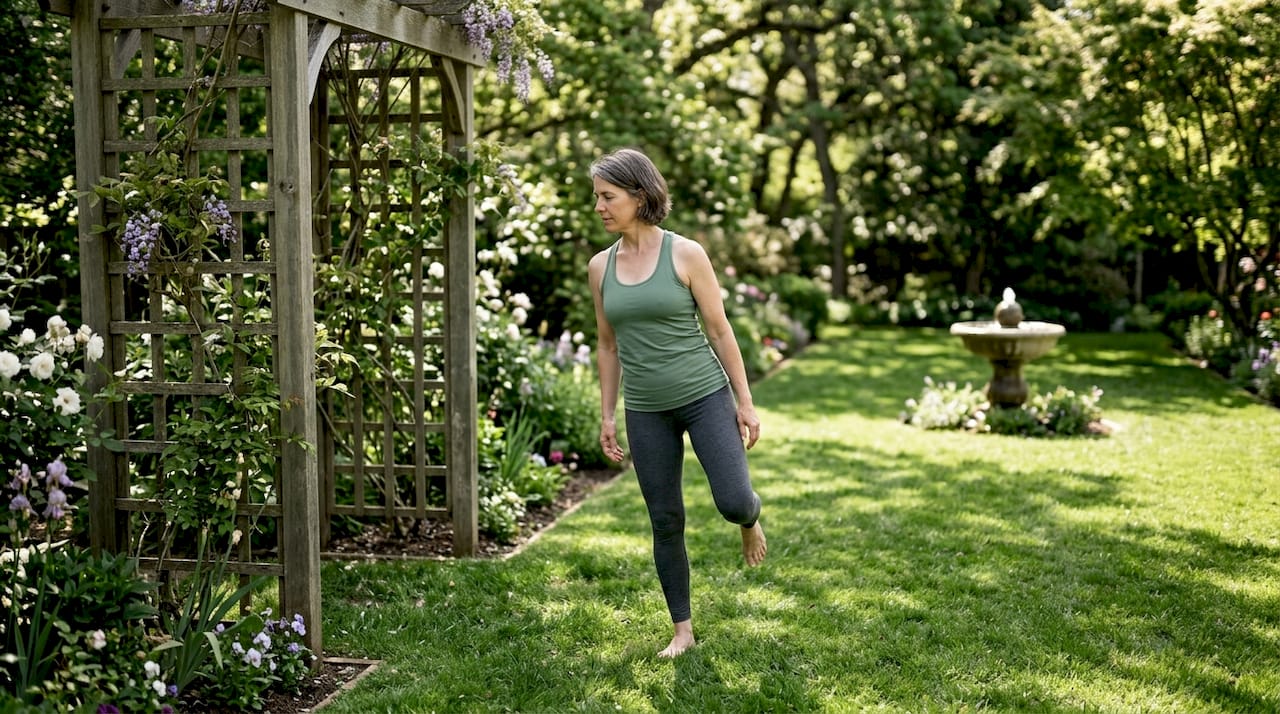
Balance improvement exercises are targeted movements designed to strengthen the postural muscles, sharpen sensory integration, and reduce fall risk through progressive stability training. Programs like the Otago Exercise Program, FallProof, and Tai Ji Quan have demonstrated 20% to 58% fall reduction in older adults, making structured balance training one of the most evidence-backed interventions in physical rehabilitation. Whether you are recovering from an injury, managing age-related stability changes, or simply want to move with more confidence, the right exercises can make a measurable difference. This guide walks you through the most effective techniques, how to start safely, and when professional support from a clinic like Contemporaryrehabservices makes sense.

1. What are the most effective types of balance improvement exercises?
Balance training targets three distinct mechanisms: sensory integration, muscular control, and reactive stepping. Effective programs address all three rather than relying on a single drill. The most evidence-supported categories include:
Static balance exercises: Single-leg stands, tandem stance (one foot directly in front of the other), and eyes-closed standing challenge your body to hold a stable position without movement. These build the foundational postural control needed before advancing to dynamic work.
Dynamic balance exercises: Heel-to-toe walking, grapevine steps, and marching in place require your body to maintain stability while moving. These exercises more closely mirror real-world demands like walking on uneven sidewalks.
Reactive balance training: Perturbation exercises, where you respond to unexpected surface shifts or gentle pushes, train your neuromuscular system to recover quickly from slips and trips. A 2026 review of 64 studies confirms reactive training produces superior neuromuscular adaptation compared to static drills alone.
Multimodal programs: Structured programs like Otago, FallProof, and Tai Ji Quan combine strength, balance, and flexibility into one cohesive routine. The FallProof program shows large improvements in static balance and significant reductions in fear of falling across 11 randomized controlled trials.
Task-oriented training (TOT): This approach uses goal-directed movements like stepping over objects, carrying items while walking, or rising from a chair repeatedly. TOT leverages neuroplasticity by practicing whole movements rather than isolated muscle actions.
Pro Tip: If you can only choose one starting point, combine a static hold like the single-leg stand with a dynamic task like sit-to-stand repetitions. That pairing addresses both foundational stability and functional strength simultaneously.
2. How to safely start and progress with balance exercises at home
Starting balance training at home is straightforward when you follow a clear progression structure. Rushing through levels is the most common mistake, and it increases fall risk rather than reducing it.
Position yourself near support. Begin every session standing next to a sturdy counter, kitchen chair, or wall. Touch it lightly with one or two fingers rather than gripping it. This gives you a safety net without eliminating the balance challenge.
Apply the 10-second rule. Progress only when you can hold a position steadily for 10 seconds without grabbing support. Harvard Health’s four-stage balance test uses this same benchmark to screen fall risk. If you cannot hold tandem stance for 10 seconds, that signals a need for professional evaluation rather than independent advancement.
Reduce hand support gradually. Move from two-finger contact to one-finger contact, then to hovering your hand near the surface without touching. This gradual reduction trains your nervous system to rely on its own postural signals.
Add lower-limb strength work. Combining strength training with balance tasks using a narrow base or reduced hand support transfers gains to real-life mobility more effectively than balance drills alone. Heel raises and sit-to-stand exercises serve double duty here.
Regress without hesitation. If you feel unsteady on any given day due to fatigue, illness, or medication changes, return to the previous level. Progress is not linear, and forcing advancement on an off day creates injury risk.
Pro Tip: Train balance exercises at least twice weekly. A Community Preventive Services Task Force review of 14 studies found that home-based balance training done at this frequency produces small but statistically significant improvements in older adults, even with low-cost equipment.
3. Top 10 balance exercises for stability and fall prevention
These ten exercises cover the full spectrum from static to dynamic to reactive training. Each one is grounded in the same evidence base used by physical therapists in clinical settings.
Single-leg stand: Stand on one foot for up to 30 seconds, then switch. Progress by closing your eyes or standing on a folded towel. This is the foundational static balance drill used in virtually every structured program.
Tandem stance: Place one foot directly in front of the other, heel touching toe. Hold for 10 seconds, then switch feet. Harvard Health uses this position as one of four stages in its functional balance screening tool.
Heel-to-toe walking: Walk in a straight line placing each heel directly in front of the opposite toe. Aim to complete a 20-foot course without stepping out of line. Harvard Health recommends completing this in roughly 20 seconds as a marker of good functional balance.
Marching in place: Lift each knee to hip height alternately while standing near a wall. This builds hip flexor strength and dynamic postural control at the same time.
Heel raises: Rise onto your toes and lower slowly. Perform 10 to 15 repetitions. This strengthens the calf and ankle complex, which is the first line of defense against trips and stumbles.
Sit-to-stand: Rise from a chair without using your hands, then lower back down with control. Repeat 10 times. This exercise directly trains the movement pattern most associated with fall recovery and daily independence.
Tai Ji Quan basics: The slow, controlled weight shifts and arm movements of Tai Ji Quan improve both static and dynamic balance. Structured Tai Ji Quan programs are among the most studied fall prevention interventions, with consistent evidence of meaningful risk reduction.
Reactive stepping drills: Have a partner gently tap your shoulder from unpredictable directions, prompting a quick step to recover. This trains the reactive postural response that prevents a stumble from becoming a fall.
Grapevine steps: Step sideways, crossing one foot in front of and then behind the other alternately. This lateral movement pattern challenges hip stability and coordination in a way that forward walking does not.
Foam surface standing: Stand on a folded exercise mat or balance pad for 30 to 60 seconds. The unstable surface forces your ankle and hip muscles to work harder, accelerating sensory integration gains.
Exercise | Primary benefit | Difficulty level |
Single-leg stand | Static postural control | Beginner |
Tandem stance | Static stability screening | Beginner |
Heel-to-toe walking | Dynamic gait control | Beginner to intermediate |
Sit-to-stand | Functional strength and balance | Intermediate |
Reactive stepping drills | Neuromuscular fall recovery | Advanced |
4. How task-oriented and reactive training build real-world confidence
Static holds are the starting point, not the destination. Real-world balance demands happen while you are moving, distracted, or responding to an unexpected surface change. That is where task-oriented training and reactive balance work become critical.
Task-oriented training improves balance by practicing whole, goal-directed movements rather than isolated drills. A meta-analysis of 20 studies found that task-oriented training produced significant gains in Berg Balance Scale scores, Timed Up and Go performance, and Activities-specific Balance Confidence scores compared to conventional training. Those are not just lab numbers. They translate directly to walking faster, turning corners more safely, and feeling less anxious about moving through crowded spaces.
Reactive balance training addresses a different but equally important gap. When you trip, your nervous system has roughly 100 to 200 milliseconds to initiate a corrective step before a fall becomes inevitable. Perturbation exercises train that response to be faster and more precise. The MSD Manual notes that combining flexibility and strength with balance-specific work improves joint stability and recovery ability more than any single modality alone.
“Programs that address fear of falling through confidence-building tasks may produce greater overall benefits than focusing solely on physical balance improvements.” — FallProof meta-analysis, BMC Geriatrics
For beginners, high-intensity reactive training carries a real caution. The 2026 review of 64 studies warns that reactive drills can overwhelm low-fitness individuals, leading to fatigue or injury if dosed too aggressively. Start with gentle perturbation tasks and progress only after you have built a solid static and dynamic foundation. If you are working with a physical therapist, they can calibrate the intensity to your current capacity. For guidance on how PT supports balance recovery, a structured clinical evaluation is the safest starting point.
Key takeaways
Effective balance training combines static, dynamic, and reactive exercises with consistent frequency and measurable progression criteria.
Point | Details |
Use structured programs | Otago, FallProof, and Tai Ji Quan reduce fall risk by 20% to 58% in older adults. |
Apply the 10-second rule | Progress to the next exercise level only after holding a position steadily for 10 seconds. |
Train at least twice weekly | Home-based balance exercises done twice per week produce significant, measurable improvements. |
Combine strength and balance | Pairing lower-limb strength work with balance drills transfers gains to real-life mobility. |
Address fear of falling | Confidence-building tasks reduce psychological barriers and may improve outcomes beyond physical gains alone. |
What I’ve learned from watching patients rediscover their footing
After working with patients across Nassau County and Queens, one pattern stands out clearly. The people who make the fastest progress are not the ones who push hardest. They are the ones who measure consistently and progress deliberately.
Harvard Health’s four-stage balance test and the Timed Up and Go test are tools I recommend to every patient who asks how to track their own progress at home. Completing the TUG test within 12 seconds and heel-to-toe walking in about 20 seconds are practical benchmarks that tell you far more than how a session “felt.” Feelings are unreliable. Timed tests are not.
The other thing I would push back on is the idea that balance training is only for seniors. Athletes, post-surgical patients, and people in their 40s dealing with ankle instability all benefit from the same foundational principles. The exercises change in intensity and complexity, but the underlying logic of sensory integration and reactive control applies universally.
What I tell every patient is this: consistency beats intensity every time. Two focused sessions per week, done near a stable surface with honest progression criteria, will outperform sporadic high-effort workouts every time. If you are in the Albertson, NY area or anywhere in Nassau County and you are unsure where your baseline falls, come in for an evaluation before you start. Knowing your starting point is not optional. It is the whole plan.
— Tj
Ready to build a personalized balance training plan?
If you are looking for professional guidance on improving your stability and reducing fall risk, Contemporaryrehabservices offers individualized physical therapy programs in Albertson, NY, serving patients across Queens and Nassau County. The clinic accepts Medicare, Aetna, Cigna, Emblem, and United Healthcare plans, making access straightforward for most patients.
A licensed physical therapist at Contemporaryrehabservices will assess your current balance level using validated tools, design a program that matches your fitness and goals, and guide you through safe progression. Whether you need foundational static work, a structured program like Otago or FallProof, or advanced reactive training, the team provides evidence-based care in a supportive environment. Book your balance assessment today and take the first concrete step toward steadier, more confident movement.
FAQ
What are the best exercises for improving balance?
Single-leg stands, tandem walking, sit-to-stand repetitions, and heel-to-toe walking are among the most evidence-supported options. Structured programs like Tai Ji Quan and the Otago Exercise Program combine these into routines proven to reduce fall risk by 20% to 58%.
How often should I do balance exercises?
Twice weekly is the minimum frequency supported by research. A Community Preventive Services Task Force review of 14 studies found that home-based balance training done at least twice per week produces statistically significant improvements in older adults.
When should I see a physical therapist for balance problems?
If you cannot hold a tandem stance or single-leg stand for 10 seconds, that signals elevated fall risk and warrants a professional evaluation. A physical therapist can identify the underlying cause and design a safe, targeted program. Contemporaryrehabservices offers balance disorder evaluations for patients across Nassau County and Queens.
Is balance training safe for seniors at home?
Yes, when started near a stable support surface and progressed using measurable criteria like the 10-second hold rule. Home-based programs using low-cost equipment have demonstrated meaningful balance improvements in adults 65 and older with proper initial instruction.
What is the difference between static and dynamic balance exercises?
Static balance exercises require holding a stable position without movement, such as a single-leg stand. Dynamic balance exercises maintain stability during movement, such as heel-to-toe walking or grapevine steps. Both types are necessary for comprehensive fall prevention training.
Recommended
Comments