
The Role of Exercise in Recovery After Injury
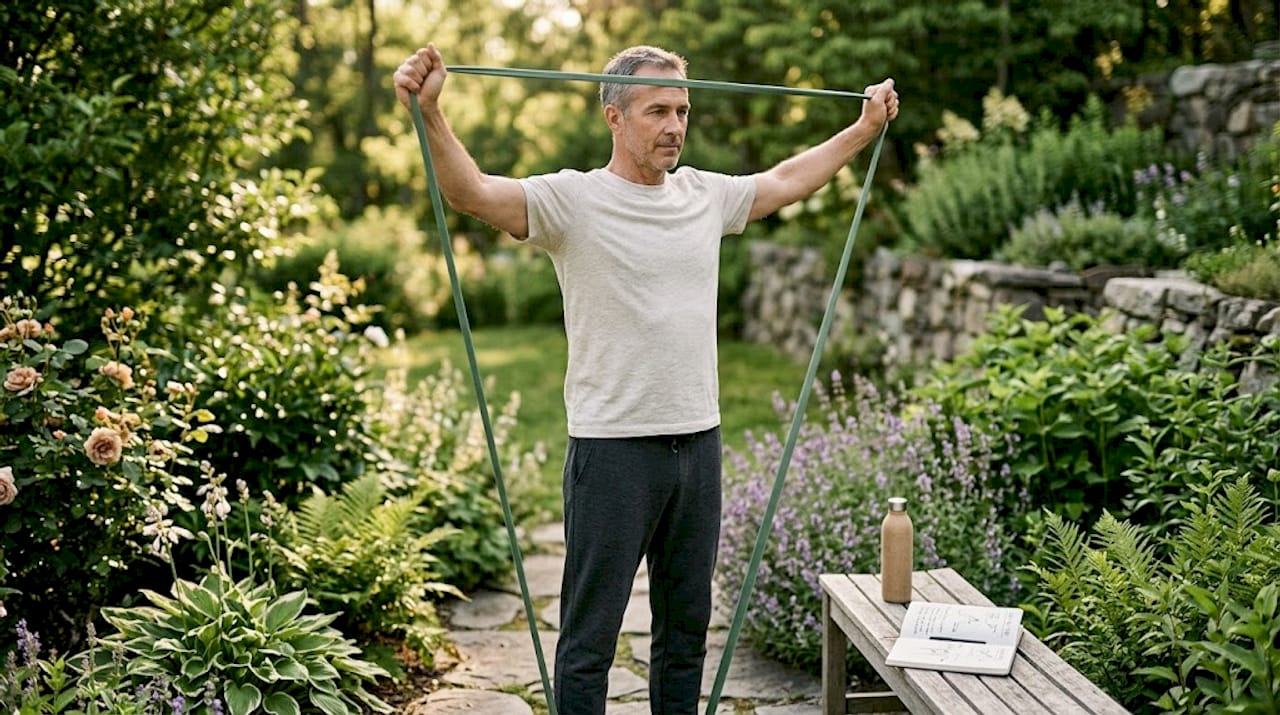
When you are recovering from an injury or surgery, the instinct is to rest. Completely. But that approach, while understandable, can actually slow you down. The role of exercise in recovery is far more significant than most people realize. Controlled, purposeful movement promotes tissue repair, restores function, reduces pain, and even supports your mental health during what can be a genuinely difficult time. This guide breaks down exactly how exercise helps, what types are appropriate at each stage, and how to do it safely so you protect your progress rather than set it back.
Table of Contents
Key takeaways
Point | Details |
Rest alone is not enough | Passive rest slows recovery; guided exercise actively accelerates tissue repair and functional return. |
Exercise has real physiological benefits | Movement improves blood flow, reduces inflammation, and triggers molecular healing processes in injured tissue. |
Different phases need different exercises | Early recovery calls for gentle movement; mid and late phases can progress to resistance and functional training. |
Safety and progression matter | Gradual increases in load, guided by a physical therapist, prevent setbacks like tendonitis and stress fractures. |
Mental health is part of recovery | Regular physical activity reduces anxiety and depression, which directly affects how well and how fast you heal. |
The role of exercise in recovery: what your body is actually doing
Most people think healing happens while you are lying still. The reality is more interesting. When you move, your body sends increased blood flow to injured areas, delivering the oxygen and nutrients that damaged tissue needs to rebuild. Just as importantly, movement clears away metabolic waste, the byproducts of inflammation that accumulate when circulation is sluggish.
Exercise also stimulates muscle protein synthesis, the biological process that rebuilds muscle fibers after they have been damaged. This is not just relevant for athletes. Anyone recovering from surgery, a fall, or a soft tissue injury depends on this process to regain strength. Research on exercise-derived exosomes shows that movement triggers the release of molecular messengers that carry healing signals to multiple organs, not just the muscles doing the work. The systemic benefits of exercise extend well beyond the site of injury.
Pain reduction is another measurable benefit. A 2026 study found that Nordic walking reduced upper body pain by up to 40% compared to non-exercisers in chronic pain patients. That kind of result comes from consistent, purposeful movement, not from rest.
“Exercise initiates complex inter-organ signaling, explaining why its benefits extend far beyond the muscles being trained. The whole body responds.”
Beyond pain, sensory nerve regrowth after injury depends on the kind of mechanical stimulation that movement provides during tendon repair. Staying completely still can deprive healing tissue of the very signals it needs to reconnect and restore full function. Understanding how physical therapy accelerates recovery helps put this in perspective: exercise is not optional in rehab. It is the core of it.
Here is a quick summary of what exercise does physiologically during recovery:
Increases local blood circulation to deliver nutrients to injured tissue
Clears inflammatory waste products that accumulate with inactivity
Stimulates muscle protein synthesis for tissue rebuilding
Triggers release of healing molecular messengers throughout the body
Supports sensory nerve regrowth essential for functional recovery
Reduces chronic pain through both mechanical and neurological pathways
Types of exercise for each recovery phase
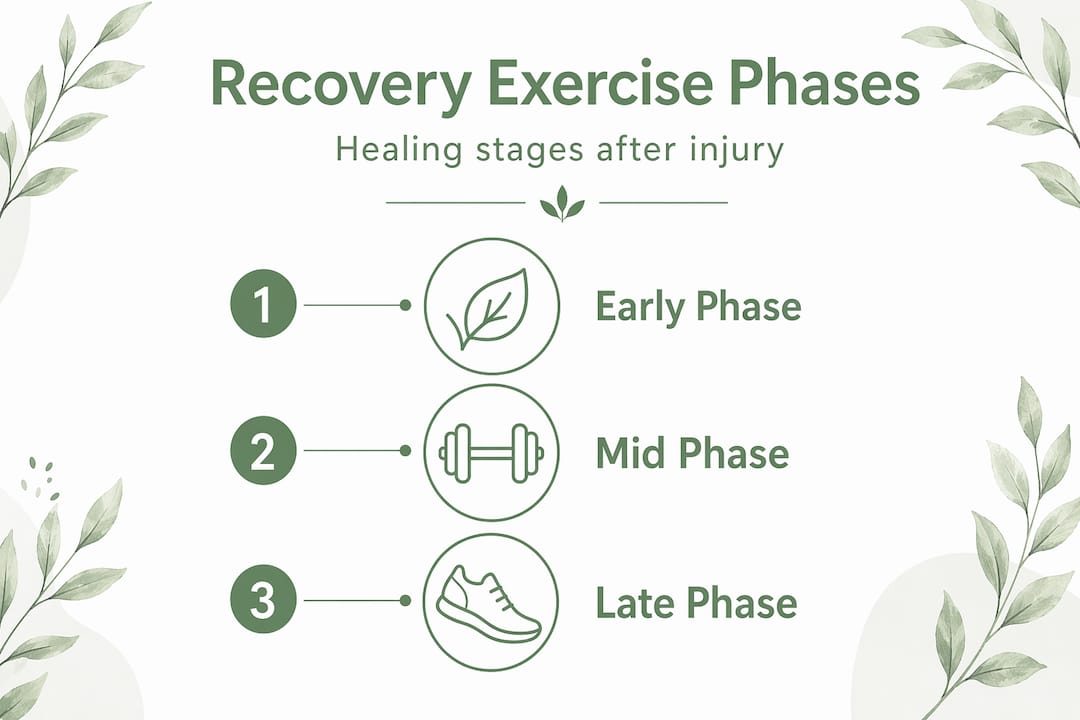
Not all exercise is appropriate at every stage. Choosing the wrong type, or pushing too hard too early, can cause setbacks. Here is how to think about it across the recovery timeline.
Early phase: gentle and low-impact
In the first days and weeks after injury or surgery, the goal is not strength. It is circulation, gentle range of motion, and preventing the muscle wasting that comes with prolonged inactivity. Walking, gentle stretching, and water-based exercise (hydrotherapy) are well-suited here. Swimming in particular reduces joint load while keeping the body moving.
Mid phase: building function
As healing progresses, light resistance training and more structured movement patterns become appropriate. This is where you start rebuilding the strength and coordination needed for daily tasks. Yoga-style flexibility work, bodyweight exercises, and targeted strengthening fit this phase well.
Late phase: returning to full activity
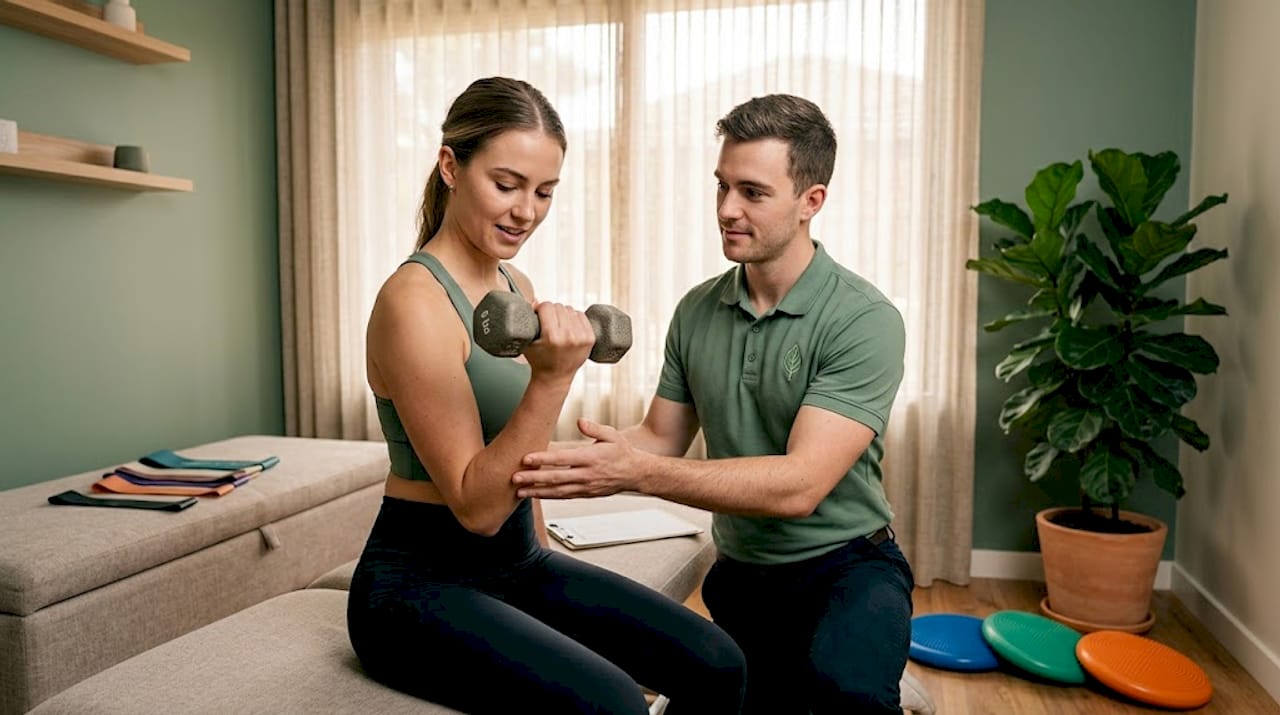
The final stage focuses on functional movement, including the activities you need to return to work, sport, or an active lifestyle. This is where supervised programs show a clear advantage. Guided prehabilitation before ACL surgery produces significantly better outcomes than self-directed home training, reinforcing that supervision during any intensive rehab phase improves results.
Exercise type | Best phase | Key benefit |
Walking / hydrotherapy | Early | Circulation, low joint stress |
Stretching / yoga | Early to mid | Flexibility, reduced stiffness |
Light resistance training | Mid | Muscle rebuilding, coordination |
Functional strength training | Late | Return to daily tasks and sport |
Cardiac rehab exercise | Post-cardiac event | Reduces mortality, improves quality of life |
For cardiac patients specifically, exercise in cardiac rehabilitation reduces cardiovascular mortality, lowers hospital readmission rates, and measurably improves quality of life. This is a well-documented example of what structured, supervised exercise can do in a medical recovery setting.
Pro Tip: If you are pre-surgery, ask your physical therapist about prehabilitation. Starting a supervised exercise program before your procedure can improve your strength baseline and speed up your post-operative recovery significantly.
Exercising safely during rehabilitation
The risk of pushing too hard is real, and it is worth taking seriously. Active recovery depends on a careful balance between applying enough stress to stimulate repair and giving your body time to respond. Overtraining without adequate rest risks tendonitis, stress fractures, and fatigue that can extend your recovery timeline rather than shorten it.
Here is how to stay on the right side of that line:
Start with a baseline assessment. Before adding any exercise to your recovery plan, understand where you are starting from. A physical therapist can evaluate your current strength, range of motion, and pain levels to set an appropriate starting point.
Use graded progression. Increase exercise intensity, duration, or resistance in small increments, generally no more than 10% per week. This gives tissue time to adapt without being overwhelmed.
Watch for warning signs. Increased swelling, sharp pain during movement, or pain that lingers more than two hours after exercise are signals to back off. Mild soreness is normal; sharp or worsening pain is not.
Distinguish rest days from active recovery days. Complete rest has its place, especially in the acute phase. But active recovery using gentle movements on non-intensive days often serves healing better than lying still.
Work with a licensed physical therapist. No app or article can replace professional assessment. A therapist can monitor your response to exercise and adjust your program in real time.
Pro Tip: Keep a simple daily log of your pain levels, energy, and how you felt during and after exercise. This gives your physical therapist concrete information to work with and helps you spot patterns that indicate overtraining before it becomes a problem.
Learning how to do physical therapy exercises safely at home is a skill worth developing, especially for those managing rehabilitation between clinic visits.
Mental health benefits of exercise in recovery
The physical side of recovery gets most of the attention. But the mental and emotional side is just as important, and exercise addresses both simultaneously.
Physical activity during recovery does more than rebuild muscle. It directly affects your mood, sleep, and motivation. A Cochrane Review of 35 randomized controlled trials found that exercise is comparably effective to pharmacological treatments for reducing symptoms of depression. For someone facing weeks or months of rehabilitation, that is a significant finding.
Here is what regular exercise does for your mental state during recovery:
Reduces anxiety and depressive symptoms through endorphin release and neurochemical regulation
Improves sleep quality, which is critical for physical healing
Builds a sense of control and self-efficacy when injury can make you feel powerless
Supports rehabilitation adherence by creating positive routine and momentum
Reduces the likelihood of returning to sedentary habits after recovery is complete
“Psychological distress negatively affects physical rehab outcomes. Integrated mental health support within exercise-based programs substantially improves both adherence and results.”
This is not a secondary consideration. Research in cardiac populations found that exercise reduces anxiety and depression and improves mental quality of life in rehabilitation patients. When you feel better emotionally, you show up for your sessions, you push through discomfort more effectively, and you recover faster.
If you are dealing with pain that affects both your body and your mood, understanding the connection between exercise and chronic pain can help you see why staying active, even gently, is protective rather than risky.
Practical tips for building exercise into your recovery
Knowing that exercise helps is one thing. Actually fitting it consistently into your recovery routine is another. Here are the principles that make it sustainable.
Match your exercise to your current stage. Use the phase breakdown above as a guide. Do not compare your program to someone else’s. Your recovery timeline is your own.
Build a consistent schedule. Even 15 to 20 minutes of gentle movement daily is more beneficial than a single long session once a week. Consistency drives adaptation.
Use your multidisciplinary team. Physical therapists, your surgeon, and your primary care doctor should all be aware of what you are doing. Coordinated care produces better outcomes than working in isolation.
Track your recovery signals. Pay attention to how your body responds after each session. Muscle repair depends on adequate protein intake, hydration, and sleep alongside exercise, so support your program with those fundamentals.
Use technology wisely. Fitness trackers, heart rate monitors, and rehab apps can provide useful feedback, but treat them as tools to supplement professional guidance, not replace it.
Adjust without guilt. Some days you will need to scale back. That is not failure. It is appropriate responsiveness to what your body is telling you. Rigid adherence to a plan that is not working for you that day creates more problems than it solves.
The role of fitness in rehabilitation is not about being an athlete. It is about regaining your capacity to live the life you want, at whatever level that means for you.
My honest take on exercise and recovery
I have worked with enough patients to know that the hardest part of this conversation is not getting people to understand that exercise helps. It is convincing them that moving through fear is not the same as making their injury worse.
In my experience, the patients who recover fastest are not the ones who do the most exercise. They are the ones who stay consistent at an appropriate level and trust the process long enough to see results. Passive rest as the primary strategy almost always leads to weaker tissue, reduced joint mobility, and a longer overall timeline. I have seen it repeatedly.
What I have also seen is that recovery is deeply personal. Two people with the same surgery can have completely different responses to the same exercise program. That variability is not a flaw in the science. It is a reminder that individualized guidance matters more than any general protocol. A physical therapist who knows your history, your thresholds, and your goals will always produce better outcomes than a generic plan.
If I could tell every recovering patient one thing, it would be this: advocate for yourself. Ask for supervised exercise programming. Ask about prehabilitation before surgery if you have time. Ask your therapist to explain the reasoning behind every exercise they prescribe. The more engaged you are, the better your outcomes will be. That is not a theory. It is what I have watched happen, consistently, over years of practice.
— Tj
Ready to recover smarter with Contemporaryrehabservices?
If you are recovering from an injury or surgery in Nassau County or Queens, you do not have to figure this out on your own. Contemporaryrehabservices is a boutique physical therapy clinic in Albertson, NY, that builds personalized, supervised exercise programs designed around your specific condition and recovery stage.
The team at Contemporaryrehabservices accepts Medicare, Aetna, Cigna, Emblem, and United Healthcare plans, so access to expert care is realistic for most patients. Whether you are in the early stages of post-surgical rehab or trying to return to full activity after a chronic injury, a supervised program makes a measurable difference. Visit the Albertson physical therapy location page or explore the Searingtown clinic to book a consultation and get a program tailored to where you are right now.
FAQ
Can exercise speed up recovery after surgery?
Yes. Guided exercise improves blood flow, stimulates tissue repair, and prevents muscle loss, all of which shorten overall recovery time. Supervised programs consistently outperform rest-only approaches in clinical research.
What exercises are safe during early injury recovery?
Walking, gentle stretching, and water-based movement like swimming are generally well-suited to early recovery. Always confirm with your physical therapist before starting any exercise in the acute phase.
How does exercise help with mental health during rehabilitation?
Regular physical activity reduces symptoms of depression and anxiety through neurochemical changes. A Cochrane Review of 35 trials found exercise comparably effective to medication for depression, which directly supports rehab adherence.
What is the difference between active recovery and rest?
Rest means stopping physical activity completely. Active recovery involves low-intensity movement like light walking or stretching on non-intensive days, which supports circulation and healing without adding stress to injured tissue.
How do I know if I am exercising too much during recovery?
Sharp pain during exercise, swelling that worsens after a session, or fatigue and soreness that lasts more than two hours post-exercise are signs you need to reduce intensity. A physical therapist can help you calibrate the right load for your current stage.
Recommended
Comments