
Craniosacral therapy: What evidence and experience reveal
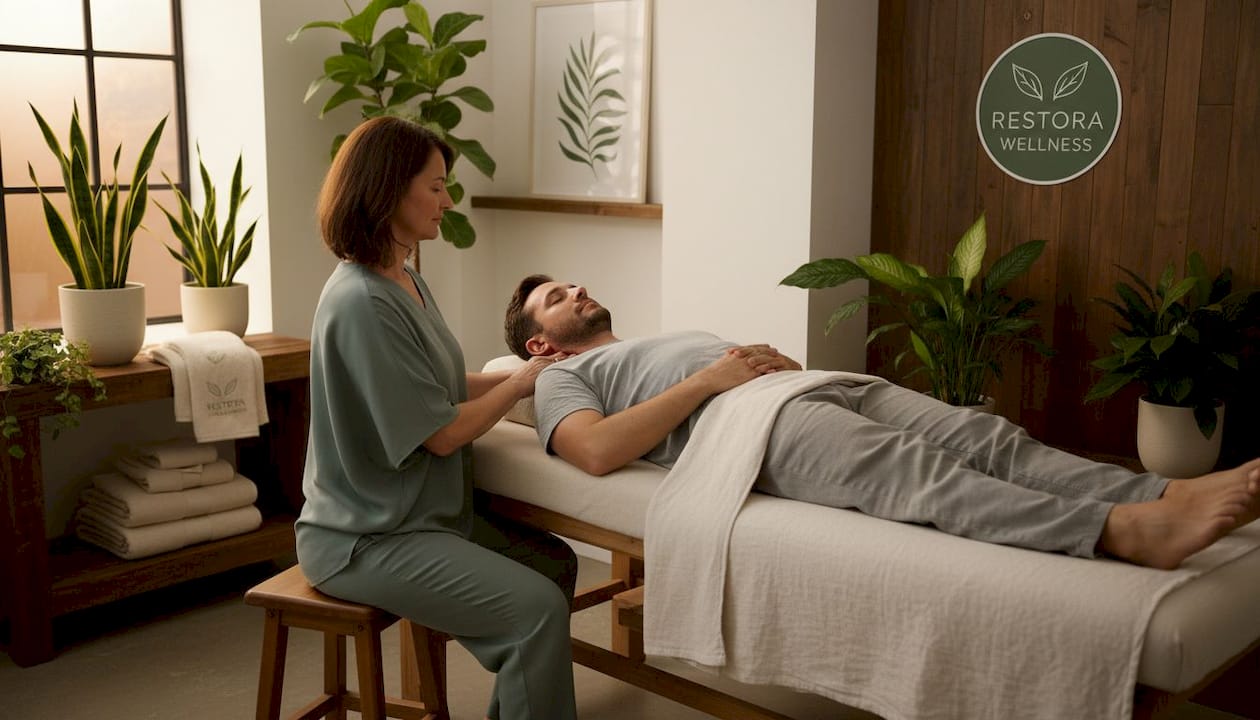
If you’ve been searching for a gentle, non-invasive option to manage stress, chronic pain, or tension in the Queens or Nassau County area, you’ve probably come across craniosacral therapy. And you’ve probably also found conflicting opinions online. Some sources call it transformative; others dismiss it entirely. The truth, as with most things in health and wellness, sits somewhere in between. This guide cuts through the noise, walking you through what craniosacral therapy actually involves, what the research honestly says, where its limits are, and how it can realistically fit into your personal wellness plan.
Table of Contents
Key Takeaways
Point | Details |
CST’s roots and ideas | Craniosacral therapy uses gentle touch to release tension and is based on unique, debated theories. |
Evidence is mixed | Scientific research finds some benefits, especially for stress and symptom relief, but results are inconsistent. |
Complementary, not curative | CST works best as part of a holistic plan rather than as a stand-alone cure. |
Personalized results matter | Focusing on modest, sustainable gains is often more practical than hoping for a cure. |
Local resources | Qualified CST and holistic therapy providers are available to support your wellness journey. |
What is craniosacral therapy? Demystifying the basics
With clarity on our goals, let’s start with the fundamentals: what craniosacral therapy actually involves and why it remains both popular and debated.
Craniosacral therapy, often abbreviated as CST, is a form of gentle, hands-on bodywork. A trained practitioner uses very light touch, typically no more than the weight of a nickel, to assess and address what they identify as restrictions or imbalances in the craniosacral system. This system includes the membranes and cerebrospinal fluid that surround and protect your brain and spinal cord, running from the skull (cranium) down to the tailbone (sacrum).
Understanding what craniosacral therapy is starts with grasping its core belief: that the body has its own rhythm, often called the cranial rhythmic impulse. Practitioners believe this rhythm, produced by the flow of cerebrospinal fluid, can be felt through the skull, spine, and sacrum. By sensing disruptions in that rhythm, a CST therapist aims to gently release tension and improve the body’s overall function. However, the how craniosacral rhythm works question is genuinely complex. As peer-reviewed research acknowledges, the underlying CST model has proposed biological explanations, but scientific descriptions emphasize uncertainty and competing hypotheses about mechanisms.
What happens during a typical CST session?
A session usually lasts between 45 and 90 minutes and takes place fully clothed on a massage table. Here’s what to generally expect:
Initial consultation: Your therapist will review your health history, current concerns, and wellness goals.
Gentle palpation: The practitioner places their hands on various points, including the head, neck, shoulders, and lower back, and uses very light pressure.
Listening and releasing: Rather than active manipulation, the therapist “listens” to the rhythm of your craniosacral system and gently encourages areas of tension to release.
Rest and integration: Many people feel deeply relaxed or even drowsy during the session. Some notice mild warmth or subtle movement sensations in their body.
Post-session discussion: Your therapist may share observations and suggest follow-up care or complementary approaches.
It’s also worth noting that CST is practiced by a range of professionals, including physical therapists, osteopaths, massage therapists, and chiropractors, each bringing their own clinical training to the technique. This variety in practitioner background is one reason experiences with CST can differ so widely.
Potential benefits: What do people and studies report?
Now that you know what CST is, let’s explore what people say about its real-world benefits and what research shows about these claims.
If you read personal accounts from people who have tried CST, you’ll find many who describe genuine improvements in how they feel. Reduced neck pain, better sleep, a noticeable drop in anxiety, and relief from chronic headaches are among the most commonly reported outcomes. Naturally, these firsthand accounts are compelling, especially when you’re the person dealing with daily discomfort.

Research paints a more cautious picture, but that doesn’t mean it’s entirely discouraging. Reviews of CST and symptom relief suggest that modest benefits are plausible for certain conditions, even if the evidence isn’t strong enough to make sweeping claims. A major systematic review concluded that the evidence for craniosacral approaches is heterogeneous and insufficient to draw definitive conclusions. What that means in plain language is this: some studies show benefits, others don’t, and the quality of those studies varies too much to declare CST definitively effective or ineffective.
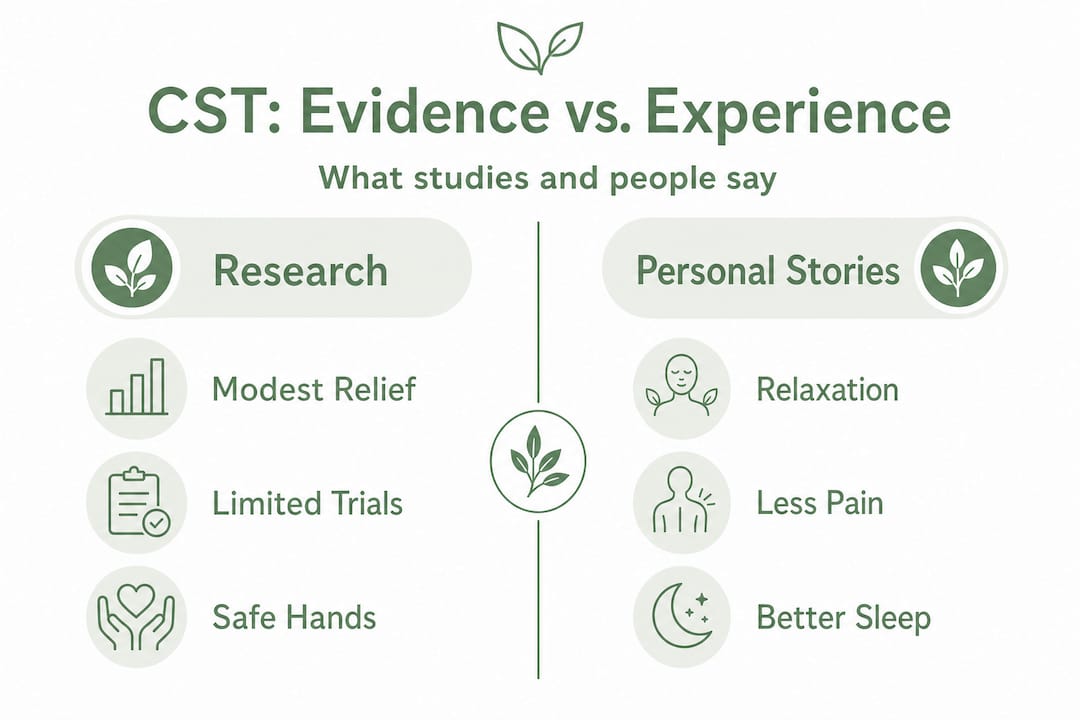
The NIH’s National Center for Complementary and Integrative Health (NCCIH) has similarly noted that complementary approaches may provide modest effects for chronic pain management broadly, though CST is not singled out as a clearly recommended therapy in its clinical guidance.
Conditions where CST is most commonly explored:
Chronic neck and back pain
Tension headaches and migraines
Fibromyalgia
Post-traumatic stress disorder (PTSD)
Sleep disturbances
Anxiety and general stress
TMJ (temporomandibular joint) dysfunction
Recovery from concussion or traumatic brain injury
For those seeking physical therapy for pain in Nassau County or Queens, it helps to see how reported outcomes measure up against what research documents.
Outcome | User reports | Research finding |
Pain reduction | Frequently reported | Mixed; modest effects in some studies |
Improved sleep | Commonly noted | Limited, preliminary evidence |
Stress and anxiety relief | Very commonly reported | Some positive findings; evidence weak |
Headache relief | Often cited | Modest improvements in a few small trials |
Autonomic nervous system balance | Reported by practitioners | Theoretical basis; minimal clinical proof |
The key takeaway here is symptom management, not cure. CST may help you feel better in meaningful ways, even when it doesn’t “fix” an underlying condition. For many people dealing with chronic stress or persistent discomfort, that kind of functional improvement genuinely matters.
Statistic to keep in mind: Studies on CST vary widely in design and sample size, which is why the research pool can’t yet provide the kind of strong, uniform evidence seen with more established treatments. This doesn’t mean CST doesn’t help; it means we don’t yet have the clinical trials to say exactly who it helps and how much.
Limits and cautions: Setting realistic expectations
With research and experience outlining possible value, it’s vital to know CST’s limits so you can make empowered choices.
Being honest about what CST can and can’t do is one of the most respectful things we can offer you as you navigate your wellness options. CST works best when it’s part of a broader approach to care, not when it’s positioned as your sole or primary solution.
Expert clinical commentary is clear on this point. According to clinical guidance, CST should not be positioned as first-line or curative treatment due to limited high-quality human studies, though it may be a useful adjunct for some patients.
“Craniosacral therapy may help some people feel better, but it should not be mistaken for a cure. The most effective path is one that combines it thoughtfully with evidence-based care.”
Understanding what CST therapists do can also help you identify situations where it’s appropriate to try and situations where you should prioritize other care.
When CST may be appropriate vs. when it’s not:
Stress and anxiety management: Possible benefit. CST’s calming, hands-on nature may support relaxation responses and help regulate nervous system activity.
Chronic tension headaches: Possible modest benefit, especially when used alongside other therapies such as physical therapy or medication management.
Post-injury recovery (minor trauma): May be used as a gentle adjunct. Always coordinate with your primary care provider or physical therapist first.
Fibromyalgia or chronic widespread pain: Limited evidence exists; however, some patients report subjective relief. Manage expectations carefully.
Acute medical emergencies: Absolutely not appropriate. CST is not a substitute for emergency care.
Serious neurological conditions (undiagnosed or unstable): Not appropriate without explicit clearance from your neurologist or physician.
Active infections, blood clots, or recent head trauma: Avoid CST until cleared by a medical professional.
Children and pediatric care: Sometimes used, but parental consent and pediatric clearance are essential; evidence base is very limited.
Understanding the unique benefits CST offers starts with recognizing it as one tool, not the whole toolbox.
Pro Tip: Before you book a CST session, write a brief summary of your current treatments, medications, and health conditions and share it with both your CST practitioner and your existing healthcare provider. Open communication prevents overlap, potential risks, and wasted time.
Practical integration: How CST fits into holistic care
Knowing how to use CST wisely is as important as knowing what it might do, so let’s look at making it part of a holistic wellness plan.
One of the real strengths of craniosacral therapy is how naturally it tends to complement other approaches. Because it’s gentle and non-invasive, it rarely conflicts with ongoing treatments. Many people in Queens and Nassau County who come to us are already doing some combination of physical therapy, yoga, mindfulness practice, or medication management. CST can often sit alongside those approaches without complication.
Here’s a practical look at how CST compares to other common holistic therapies:
Therapy | Primary focus | Touch level | Evidence base | Best combined with |
Craniosacral therapy | Craniosacral system, nervous system | Very light | Limited, mixed | Physical therapy, mindfulness |
Massage therapy | Soft tissue, muscle tension | Moderate to firm | Moderate for pain/stress | Exercise, stretching |
Physical therapy | Rehabilitation, function, strength | Varies | Strong for many conditions | Home exercise, CST |
Yoga/mindfulness | Flexibility, breath, stress response | Self-directed | Moderate to strong | Any complementary therapy |
Acupuncture | Energy channels, pain pathways | Needle-based | Moderate for specific pain types | Massage, physical therapy |
As the clinical evidence consistently shows, CST works best when framed as symptom management within a broader plan. Expectations should be grounded in that reality.
Checklist before starting CST:
Have you discussed CST with your primary care doctor or specialist?
Do you have a clear, realistic goal for trying CST (e.g., reduce tension headaches, improve sleep quality)?
Have you researched your practitioner’s training and credentials?
Are you prepared to track your symptoms before, during, and after sessions?
Do you understand that several sessions may be needed before you notice any change?
Are there any red-flag symptoms (sudden severe headache, vision changes, neurological symptoms) that would prompt you to stop and seek urgent care?
Following this kind of step-by-step guide helps you approach CST with clarity and intention rather than uncertainty.
Pro Tip: Try committing to three to five sessions before making a final judgment. Track your sleep quality, pain levels, and stress ratings on a simple 1-10 scale before each session. Patterns in your own data are more reliable than impressions alone. And check out how reducing stress with CST can work as part of a broader plan.
A real-world view: Why modest, personalized gains matter more than miracles
After exploring CST’s integration into holistic wellness, it’s worth stepping back and reflecting on what the research, clinical experience, and lived stories really mean for people here in Queens or Nassau County.
Here’s something we notice consistently: most people seeking therapy are not looking for a miracle. They want to sleep through the night. They want to sit at their desk without shoulder tension turning into a tension headache. They want to manage the cumulative weight of stress without relying entirely on medication. These are modest, real, achievable goals. And they are exactly the kind of goals where a therapy like CST has the most realistic chance of contributing value.
The evidence doesn’t promise miracles. Neither should any honest provider. But evidence not promising miracles is very different from evidence saying “this definitely doesn’t work.” The truth is that individual variation is enormous. Some people respond strongly to CST and find it genuinely changes their quality of life. Others feel nothing. That’s not a failure of the therapy or the person. It’s the reality of how bodies and healing work.
What we’ve seen in clinical practice supports a simple principle: the wisest approach layers new tools onto established care, observes results honestly, and keeps what helps while letting go of what doesn’t. That’s not defeatism. It’s good science and good sense.
For those curious about local CST experiences in and around Albertson and Nassau County, hearing from people who’ve walked a similar path can be enormously grounding.
“Incremental progress is still progress. A 30% improvement in your sleep or a meaningful reduction in daily tension isn’t a small thing. For many people, it’s life-changing. Don’t let the absence of a dramatic cure stop you from appreciating real, personal gains.”
Find craniosacral therapy and holistic support near you
Ready to find support or start your journey with CST? Here’s how to take the next steps.
If you’re in Queens or Nassau County and considering craniosacral therapy, the most important first step is connecting with a qualified provider who understands your full health picture. At our boutique physical therapy clinic in Albertson, NY, we specialize in integrating approaches like CST with evidence-based physical therapy, tailored to what actually works for you.
We accept Medicare, Aetna, Cigna, Emblem, and United Healthcare plans, so comprehensive, personalized care is more accessible than you might think. Whether you’re exploring CST for chronic pain, stress relief, or overall wellness, our team is here to guide you with honesty, expertise, and real support. Explore our services in Searingtown craniosacral therapy or browse our full list of therapy services to find the right fit for your needs. You don’t have to figure this out alone.
Frequently asked questions
Is craniosacral therapy safe for everyone?
Craniosacral therapy is generally considered safe for most people when performed by a trained practitioner, but you should always consult your healthcare provider if you have specific medical concerns, recent injuries, or complex neurological conditions.
How quickly can I expect results from craniosacral therapy?
Some people notice changes in relaxation or discomfort levels after one or two sessions, while others may need several treatments to fairly evaluate whether CST is working for them.
Can craniosacral therapy cure chronic pain?
No. Current evidence suggests CST may offer modest relief as a complementary approach for some individuals, but it is not supported as a cure for chronic pain by the available research.
How does craniosacral therapy compare to massage or physical therapy?
CST uses much lighter touch and focuses specifically on the craniosacral system, while massage typically targets muscle tissue with firmer pressure and physical therapy emphasizes rehabilitation, strength, and functional recovery.
Should craniosacral therapy replace my current treatment plan?
No. As expert clinical commentary consistently notes, CST should not be positioned as a replacement for standard medical care, but may serve as a valuable addition alongside your existing treatments.
Recommended
Comments